


A few years ago, I wrote a post titled “Guns, Girls and Gemaras,” about how our eldest daughter surprised my wife and I by declaring that she wanted to enlist to the IDF rather than do sherut leumi (national service). It wasn’t as though we had any say in the matter, and she went ahead and did it. A year into her service, in September 2023, she wrote a guest post titled “Commander Slifkin Reflects” about her experiences, including the considerable challenges facing religious girls in IDF service. A year later, she completed her service. Following her, our oldest son is in hesder, currently serving in combat in Lebanon.
Despite our initial hesitations, we were ultimately very proud of our oldest daughter’s service. Still, when it came to our second daughter, who has a very different personality, we figured that her path would be national service. I duly accompanied her about two years ago to the Religious Affairs ministry so that she could claim an exemption from army service on religious grounds.
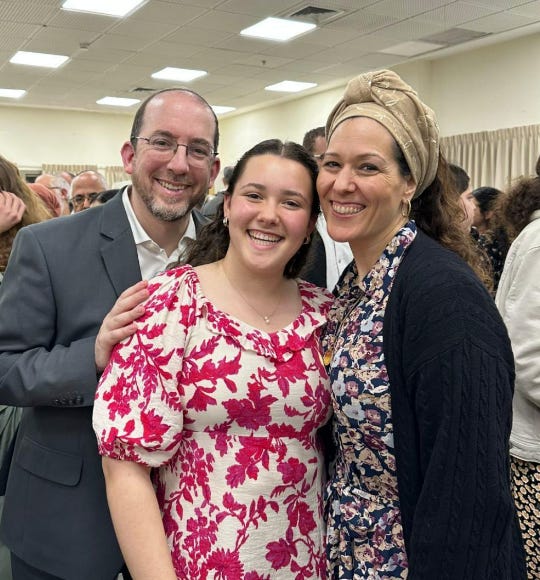
Last night, she took a train and bus home from her Midrasha (seminary) in Akko that she has been attending since graduating high school. Today she went to Jerusalem to cancel her religious exemption. She will be enlisting in a few months.
What changed? Well, part of it is that she went on a trip to Poland, which affected her profoundly. But the other part is, of course, October 7th, which changed everything. Both for her, and for me.
It used to be very rare for religious girls to serve in the IDF. But in past years, it’s been steadily increasing. This is nothing to do with feminism. It’s because they want to be more actively involved in helping protect the nation. Many rabbis are still behind the curve; only a few forward-thinking ones have established frameworks for religious girls in the IDF. But this is a phenomenon that is rapidly growing, especially since October 7th.
From my own perspective, I think that not serving is a luxury that is no longer available. במלחמת מצוה, הכל יוצאין, אפילו חתן מחדרו וכלה מחופתה - “In an obligatory war, everyone must go out, even a groom and bride from their chuppah.” I’m not presenting Rambam’s statement in order to make a statement about halacha, but rather about basic common sense. We are at war, and the IDF is suffering a severe manpower shortage. Everyone who can help needs to help. And the more religious girls that enlist, the easier it is for other religious girls who enlist to have support.
(Of course, in an ideal world, the 80,000 young charedi men would be helping, and girls wouldn’t be needed. I recall reading about how in the 1950s, there was even a prominent charedi rav who wanted to make an arrangement with the government by which charedi boys would serve in place of non-charedi girls, because he felt that it was more important to release the girls from army service. But charedim today, for the most part, do not care about relieving the military burden on others.)
The great miracle of Israel, with all the wonders that it brings us, is only possible via the commitment and sacrifice of hundreds of thousands of young (and sometimes not so young) men and women. Tonight and tomorrow is Yom HaZikaron, Remembrance Day, for the 25,644 of them who made the ultimate sacrifice. We are all indebted to them.

(If you don’t recognize the flower (which is not a poppy) in the above picture or understand its significance, then I suggest that you read my new book The Lions of Zion: Biblical Natural History and the Significance of Israel.)
beautiful article and a wonderful example for religious jews in israel . Hope we can address the problem you raised about the hasidic sects who refuse to serve . need to
think how to fight them.
I loved the article and salute both of your wonderful daughters.
I am surprised that you, a Brit, could write "surprised my wife and 'I'". How can you expect correct English from those of us in the colonies?
Kol tuv,
DS