



Evolution is feared by many as being heretical. But is this really the case? Here are ten questions about evolution and Judaism, along with brief answers. This does not substitute for the detailed discussion that this topic requires; it is merely intended as an introduction.
1) Evolution is alleged to have taken place over millions of years. But doesn't the Torah teach that the universe was created just a few thousand years ago?
There is a strong (albeit not universal) tradition in Judaism that "the account of creation is not all to be taken literally," to quote Maimonides. Rav Dovid Tzvi Hoffman (1843-1921), a member of Agudath Israel’s Council of Torah Sages, suggested that the Six Days of Creation were lengthy eras rather than 24-hour periods. Maimonides himself, as the commentaries on the Guide to the Perplexed reveal, was of the view that the Six Days represent a conceptual rather than historical account of creation.
2) Why should anyone accommodate evolution? Isn't evolution just a theory, not a fact?
"Evolution" is a confusing term, because it covers two very different concepts. One is common ancestry, the concept that all animal life arose from a common ancestor - simple organisms gave rise to fish, fish to amphibians, amphibians to reptiles, reptiles to birds and mammals (without getting into how that could have happened). This is supported by a wealth of converging evidence along with testable predictions. Common ancestry is considered by all scientists (except certain deeply religious ones) to be as well-established as many other historical facts, and is thus often referred to as "the fact of evolution." It is of immense benefit in understanding the natural world - for example, it tells us why whales and bats share anatomical similarities with mammals, despite their superficial resemblance to fish and birds.

The second and very different aspect of evolution is the mechanism via which one species changes into another. This is called the "theory" of evolution. It is, however, important to bear in mind that the word "theory" has a very different meaning in science than in everyday conversational English. It does not refer to wild speculation, but rather to an explanatory mechanism. Most, though not all, biologists believe that random mutations, coupled with natural selection, broadly suffice to explain this mechanism. The issue is, however, of zero religious significance, as we shall explain in the answer to the next question.
3) How can we accept scientific explanations for how animal life came about? It was God who made everything!
We have a science of meteorology, but that does not stop us from saying that God "makes the wind blow and the rain fall." We have a science of medicine, but this does not stop us from saying that God "heals the sick." We have documented history of the process involved in winning the '67 war, but this does not stop us from talking about God's miraculous hand. God can work through meteorology, through medicine, through history, and through developmental biology. This is why it makes no difference if the neo-Darwinian explanation of the mechanism for evolution is true or not.
4) Doesn't the Torah say that animals and man were created from the ground, not from earlier creatures?
Indeed it does. But what does that mean? The blessing recited over bread is “Blessed are You... Who brings bread out of the ground.” But what actually happens is that God created wheat, which man sows, nature grows, and man transforms into bread. Yet the blessing simplifies this in describing God as bringing bread out of the ground. By the same token, the description of God bringing animal life out of the ground can refer to His creating the raw material of nature and the natural processes that lead to the formation of animal life.
In any case, it is widely accepted today that we do not learn science from the literal meaning of Scripture - after all, Scripture describes the sky as a dome, the hare as bringing up its cud, and the kidneys and heart as housing one's mind. All these descriptions were interpreted literally by the Sages of old, and yet almost all recent Torah scholars interpret them non-literally.
5) Doesn't the notion of randomness in evolution contradict with the idea of a purposeful creation directed by God?
Judaism has always acknowledged that there are events which, in the physical world, appear to be random and happenstance. But it maintains that this does not rule out God's role behind the scenes. Indeed, this is the entire message of the Purim story! As it states in Scripture, "When the lot is cast in the lap, its entire verdict has been decided by God" (Proverbs 16:33).
6) Doesn't the Biblical concept of man being created in the image of God contradict the notion that man comes from animals?
Absolutely not! Classical Judaism has long maintained that man is not qualitatively different from animals in his physical aspects. Man's unique identity is in his spiritual soul, not in his physical body and most certainly not in his physical origins. The great medieval Torah scholars stated that man was created physically as an animal, but was given the spiritual potential to rise beyond that level. The Mishnah notes that on an individual level, we all come from a "putrid drop (of semen)," which is even less than an animal; yet we are defined not by what we come from, but rather by what we become.
7) Don't most rabbis state that evolution is heresy?
Very few leading rabbis have studied the science and have ever given the matter serious thought (and rabbis in the charedi world are not operating from the rationalist perspective that is the legacy of Maimonides and the great Torah scholars of Spain). The few rationalist-oriented rabbis who did study the topic, such as Rav Kook, Rav Yosef Ber Soloveitchik, Rav Gedalyah Nadel (a leading disciple of Chazon Ish) and Rav Aryeh Carmell, concluded that evolution is compatible with Judaism.
Rav Samson Raphael Hirsch was personally skeptical of evolution but saw no theological problem with it: "...If this notion were ever to gain complete acceptance by the scientific world... Judaism in that case would call upon its adherents to give even greater reverence than ever before to the one, sole God Who, in His boundless creative wisdom and eternal omnipotence, needed to bring into existence no more than one single, amorphous nucleus, and one single law of “adaptation and heredity” in order to bring forth, from what seemed chaos but was in fact a very definite order, the infinite variety of species we know today, each with its unique characteristics that sets it apart from all other creatures." ("The Educational Value of Judaism," in Collected Writings, vol. VII, p. 264)
8) Doesn't evolution go against tradition?
No more so than the notion of the earth orbiting the sun. That was also rejected by many leading rabbis from the era of Copernicus through today. Yet most religious Jews have managed to come to terms with it. The same is true of evolution, which has become widely accepted by religious Jews with a strong background in science and/or rationalist Jewish theology.
9) But aren’t there many secular evolutionists who use evolution to try to attack religious principles?
Yes, unfortunately there are. But this is an abuse of science; it doesn't reflect on the science of evolution itself. This, however, is why it is important for anyone teaching evolution to understand it properly.
10) You didn’t answer all my questions and objections!
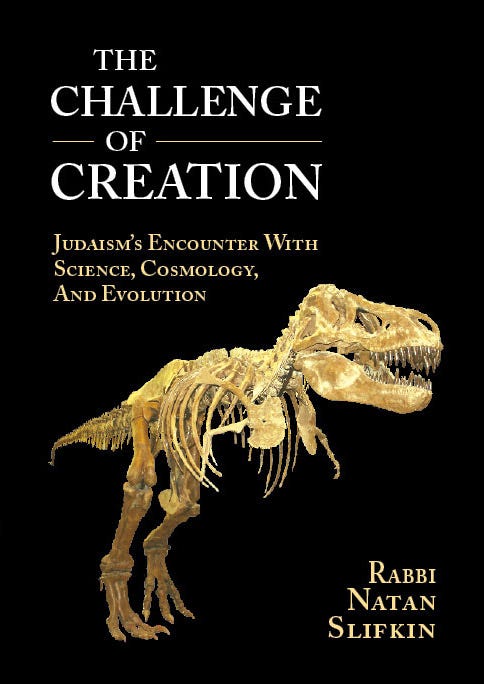
Of course not! Evolution is an immensely complicated topic, to which it is impossible to do justice in a brief article. Please see my book The Challenge Of Creation (available on Amazon but better purchased at www.BiblicalNaturalHistory.org) for a very detailed discussion.
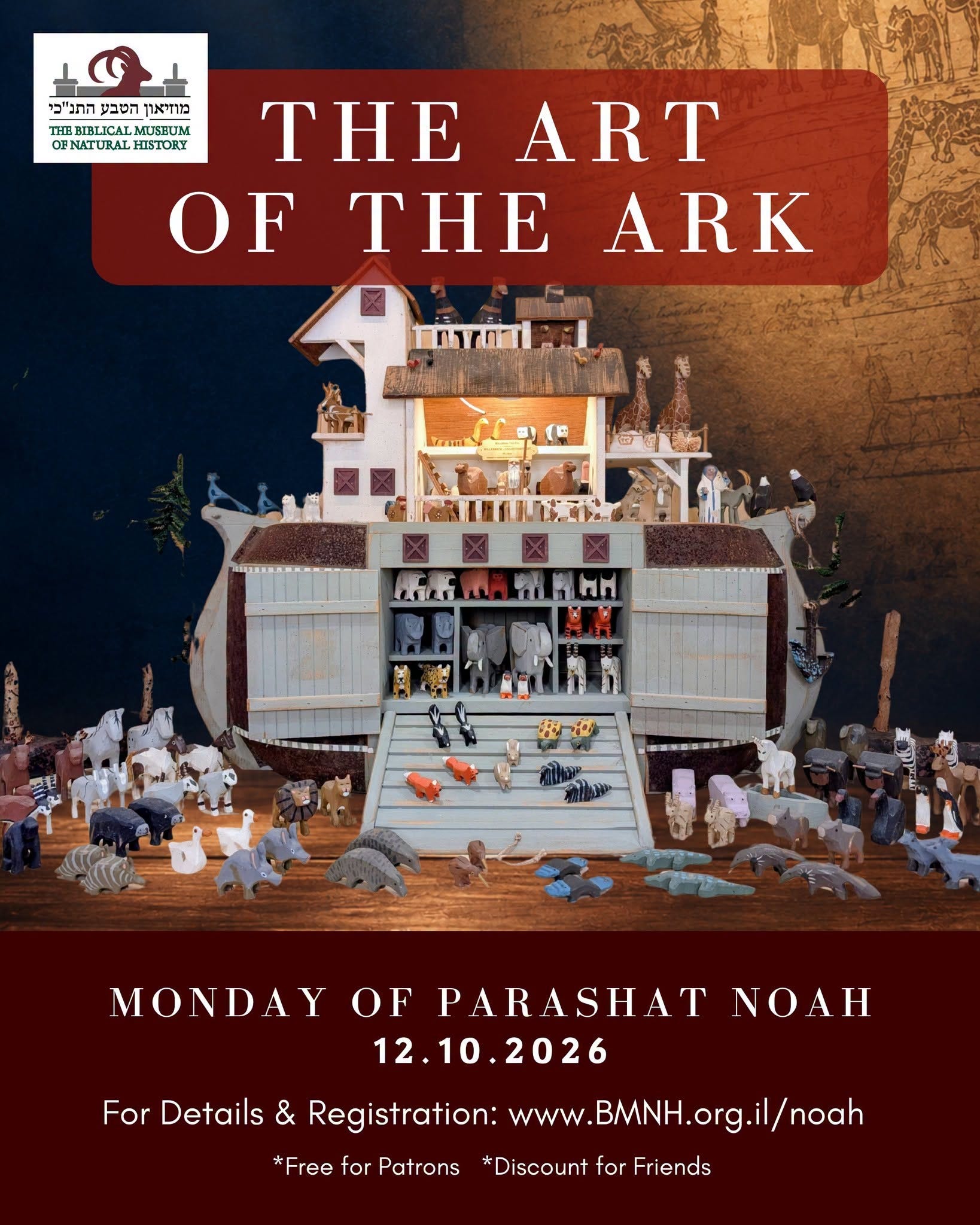
On another note - Parashat Noach is coming up next week! I’ll be giving a presentation this coming Monday about our incredible collection of Noah’s Ark paintings and models at the Biblical Museum of Natural History, including some amazing new pieces that we recently acquired, for which you can register here. Then I’m flying out for Shabbos of Parashat Noach to be scholar-in-residence at Or Torah in Skokie. I am available on the preceding Thursday in New York for a presentation, on the following Sunday in Chicago, during part of the week in NY/NJ, and on the following Shabbos (Lech Lecha) anywhere in the US/Canada; please write if you’d like to arrange something.
Dr. Gerald Schroeder has written that for apes to have split into an evolutionary direction from humans is mathematically impossible.
There is not enough time for a group of apes to develop through random mutations that “select” for a non purposeful outcome in any group into a new species.This happens only in micro-evolution where a preordained genetic predisposition can result in an epigenetic variance.
This is seen in the starving North Korean population whose height is five inches shorter than the pre Korean War equality in height.It is also seen today,especially in the quick growth in under twenty children.It is caused by ingredients that preserve food,especially cereals,bread,and other ready to eat nutrients tocopherals,vitamin E super antioxident,B vitamins as pyridoxal((B-6 type),that guards against acrylamides,glycation and excess oxidative stress in the cellular integrity of growing and maturing.
The idea of a herd of animals that cannot grow too large in numbers for lack of food availability in the distant past to change into something different is ludicrous.They are prey animals and using a selective pressure to evolve into another is not seen in nature.
You give an analogy of morphological similarity of a whale and bat is nonsense.The Harvard evolutionary biologist,Stephen Jay Gould discarded gradual evolution because he saw the lack of any change since the Cambrian era explosion of single cell life in the fossil record 530 million years ago to advanced life without any evidence of any transitional forms that must have lived in order to evolve.He invented the term “punctuated equilibrium” to self approve of very long time periods of no change to rapid change.
His counterpart at Harvard,as well as the director of the American Museum of Narural History,Erwin Mayr,developed another theory.The synthetic theory combined Darwinian random mutations combined with Mendelian.Gregor Mendel was a monk who developed pea plants as a hobby and became a forerunner in genetic theory.He saw successive generations of plants becoming tall and short from one to the next.The genetic predisposition was supposedly similar in all life.It showed variety in genetics that was not uniform.This was presumed by evolutionists to be advancing in an evolutionary sense and later used by Mayr to combine random mutations and genetic variability to believe in useful species change.
The fallacy is that small populations that are isolated can change.This is false insofar as the Galapagos finches with larger beaks on different islands and larger tortoises simply showed evolution.That false assumption was that each surviving creature was permanent.Not so.But as Mendel had shown only variation in a population not a permanent short term change,surely not by mutations that are mostly neutral and otherwise deleterious.The finches and tortoises returned to baseline size as health after illness returns to genetic baseline.
Another idea is gradual evolution in the geologic column that the founder of paleontology and comparative anatomy,the French scientist Georges Cuvier,b.1769-d.1832.He surmized that the rock layer stratigraphy showed only complete fossils,never new speciation,in advanced morphology.
He saw it as new but different creatures that were formed after catastrophic events.He saw it as new formation creation from one time period to the next.
There were five distinct major catastrophes on the earth in history.The Torah shows six periods of time called days that bookends the five major catastrophes.One wiped out dinosaurs.Others later animals.The most recent,70,000 years ago,caused near collapse in all life forms after the Toba,Indonesia volcanic destruction.One,900,000 years ago,through genetically derived DNA analysis from eastern populations,showed that the early archaic human,homo erectus,was reduced to less than 1000 individuals.
Homoerectus is one of about six or perhaps many more separate archaic humans living separately as well as contemporaneously.Some interbred,including eastern Neanderthal with Denisovan(only in eastern populations),and western Neanderthal with Homoerectus in Asia.Western Neanderthal interbred with cromagon,who only appeared from 40,000 years ago in Europe.Their hybrid remains were discovered in the Balkans and Skhul and qafzeh caves in Israel.Neanderthal disappeared as a separate archaic human at around that time.No Neanderthal DNA is in Africa except from the return of mixed genetic people only from two thousand years ago.
Africa has large genetic diversity as well as ghost DNA from ancient archaic humans from hundreds of thousands of years ago.One small such living group from Western Africa,has a haplogroup labeled A000,to denote its distinct antiquity.Another American from generations ago in South Carolina was also found to have the A000 haplotype.
The Torah speaks of the formation not creation of the Adam from the earth.The first law of thermodynamics,is that matter/energy cannot be created or destroyed.
The second law of thermodynamics is that all matter/energy becomes disordered.Founded by Rudolf Clausius,B.1822,-D.1888,a physicist and mathematician,showed that this disorder always occurs but the results are often recycled in nature as fertilizer brings brings about new food sources and water dissipates when heated but still exists as later rain or clouds or glaciers.
The Einstein formula of E=MC2 showed that matter and energy are equivalent and includes the C,that light squared became the law of special relativity.
These fundamental laws do not allow changes,only variation within a created domain.As Immanuel Velikovsky revealed in his ten years of research at Columbia university from 1940-1950,that the catastrophic events that have caused 99.9% of all life that has ever existed is now extinct.It is a devolution not evolution.His books,especially “Earth in Upheaval”,is a remarkable treatise in geologic history as Cuvier previously discovered.He was 17 years younger than Einstein,but lived nearby in Princeton,,New Jersey where many great physicists also lived including Feynman and Von Neuman amongst others at different times.Velikovsky became friendly with Einstein and had conversations regularly.The Velikovsky book,“Worlds in Collision”,was found open on the desk of Einstein when he was found after he was niftar.
R' Slifkin, if I may ask, do you truly believe that man evolved from ape/monkey, or some other animal? Interested to know where you stand on this. Thanks.