


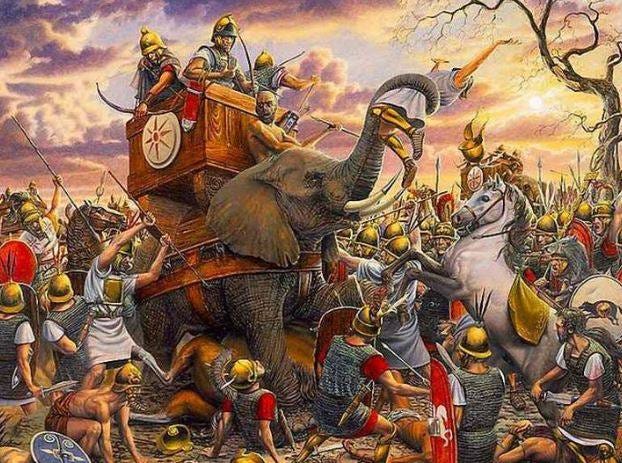
On Chanukah, we praise God for the miracles of the war against the Seleucid Greeks. “The many in the hands of the few, the mighty in the hands of the weak.” In other words, this was not a regular war. This was a war in which the odds were completely stacked against the Maccabees. The Seleucid Greek empire was immensely powerful. The war elephants were the least of it; they also maintained formidable armies with vast phalanxes and armored cavalry. And so the victory of the Maccabees was a miracle that deserve religious celebration.
But the problem is that surely the Maccabees could not possibly have known that such miracles would happen. And so how could they have decided to rebel against the Seleucids? Surely ain somchin al ha-nes, one may not rely on miracles!
And the question is even stronger. When Chazal forbade people from relying upon miracles, this did not just mean a prohibition against relying on supernatural occurrences. It also meant a prohibition against relying on anything that one could not be certain about. The Gemara speaks about preparing a backup Kohen for Yom Kippur in case the Kohen became tamei. Now, Rabbi Yom Tov Lipmann Heller, author of Tosafot Yom Tov, notes that one of the miracles of the Beit HaMikdash was that the Kohen never became tamei on Yom Kippur. And so he asks, why did they need to prepare a backup Kohen? And his answer is that you don’t rely on miracles. (עיין תוי"ט ריש דמאי ד"ה והחומץ). Now, it’s certainly not a supernatural miracle for the Kohen to not become tamei. Statistically, it’s very likely. But because it’s not guaranteed, you’re not allowed to rely on it!
And the same is true for war. You are not allowed to rely on a miraculous result, or indeed on any form of supernatural intervention. When we have the very first preparations of the Bnei Yisrael to go into the Land of Israel and figure out their military strategies, here is what Rabbeinu Bechaya says in his commentary to Bamidbar 13:2:
“The horse is prepared for the day of battle; but victory comes from God” (Proverbs 21:31). In this verse Solomon warns everybody to do whatever is in his power by using natural means to achieve his success, and to leave whatever is beyond that in the Hands of Heaven. A miracle occurs only when all natural means have proven to be inadequate to produce the desired result. Man was created to exist in the framework of the laws of nature, and therefore he needs to do whatever actions and arrangements are ordinarily required to achieve his desired aims. This is just as if a person wants to go to war against his enemies, he should equip himself with weapons and horses and chariots for the day of war, for if he does not do so, he will be delivered into the hands of his enemies. Or if a person is sick, one ensures that he receives the correct diet and medication and avoid harmful foods, and after doing everything in one’s power, and exerting all one’s effort, and doing everything according to the laws of nature, it is appropriate to trust that it is God who is responsible for the desired result being achieved… And even though the Bnei Yisrael did not need this, for their victories were not in the manner of ordinary events and nature but rather due to merit and punishment… nevertheless the Torah commands Israel to do all necessary preparatory effort and to leave the rest to the One who provides salvation, for the Torah never relies on miracles.
As Rabbeinu Bechaya explains, we live in a world of natural law. We have to treat going to war exactly as we treat physical health and everything else in life - you do the ordinary physical hishtadlut and you cannot rely on supernatural forces in any way.
So, again, how could the Maccabees have risked their lives in a war where the odds were completely stacked against them and relied on a miracle that they surely could not be certain would happen? Indeed, the later Jewish rebellions against the Romans, done by people who were convinced that God was on their side and that they would be able to defeat the mighty Roman army just as the Maccabees defeated the Seleucids, were a complete disaster! (And some of the Sages of that period realized this and were againt trying to challenge Rome, and preferred a negotiated surrender instead!)
I’ve seen some creative responses to this question, which explain how certain people are so holy that that it’s legitimate for them to rely on miracles. But this is going against normative traditional Judaism, as described by Rabbeinu Bechaya. I prefer to answer it in a different way.
I think that the answer is that the Maccabees were not relying on miracles. They didn’t necessarily think that they would win!
There’s no way to know whether they personally believed that they would win. But let’s presume that they were realistic and understood that their chances were slim. Why did they do it? And the answer is that when you’re evaluating whether to proceed with a risky course of action, you don’t just consider the costs of attempting and failing; you also need to consider the costs of not attempting at all.
There’s not much cost to preparing a backup Kohen for Yom Kippur. But the costs for not standing up to the Seleucid Greeks was the extinction of Judaism. Had Mattisyahu of Modi'in acceded to orders to bring a pagan sacrifice, rather than fleeing with his family to the hills and launching a rebellion, they would have lost their ability to live as Jews. This is something worth fighting for, even if you might lose.
There are certain things that are worth risking and even giving up your life for. A war to protect the physical survival of the nation is an obvious example of that. But a war to protect the survival of the nation’s identity is another one. You might hope and pray for a miracle, but you’re not relying on it - you’re just doing what you need to do, even at risk of paying the ultimate price.
Fortunately, there was a miraculous result. We celebrate God’s kindness in enabling the Maccabees to be victorious and for Judaism to survive. It’s worthy of great celebration - precisely because it was so implausible.
But we should also celebrate the Maccabees dedication to a fight in which the odds were stacked against them and with which they could not know how it would end. And indeed some of them were killed, most famously Eleazar under a falling elephant, in fulfillment of a particular sub-mission in the larger war that I discussed in a previous post. We celebrate their mesirut nefesh in its genuine sense, not the fake usage of the term that is so common today.
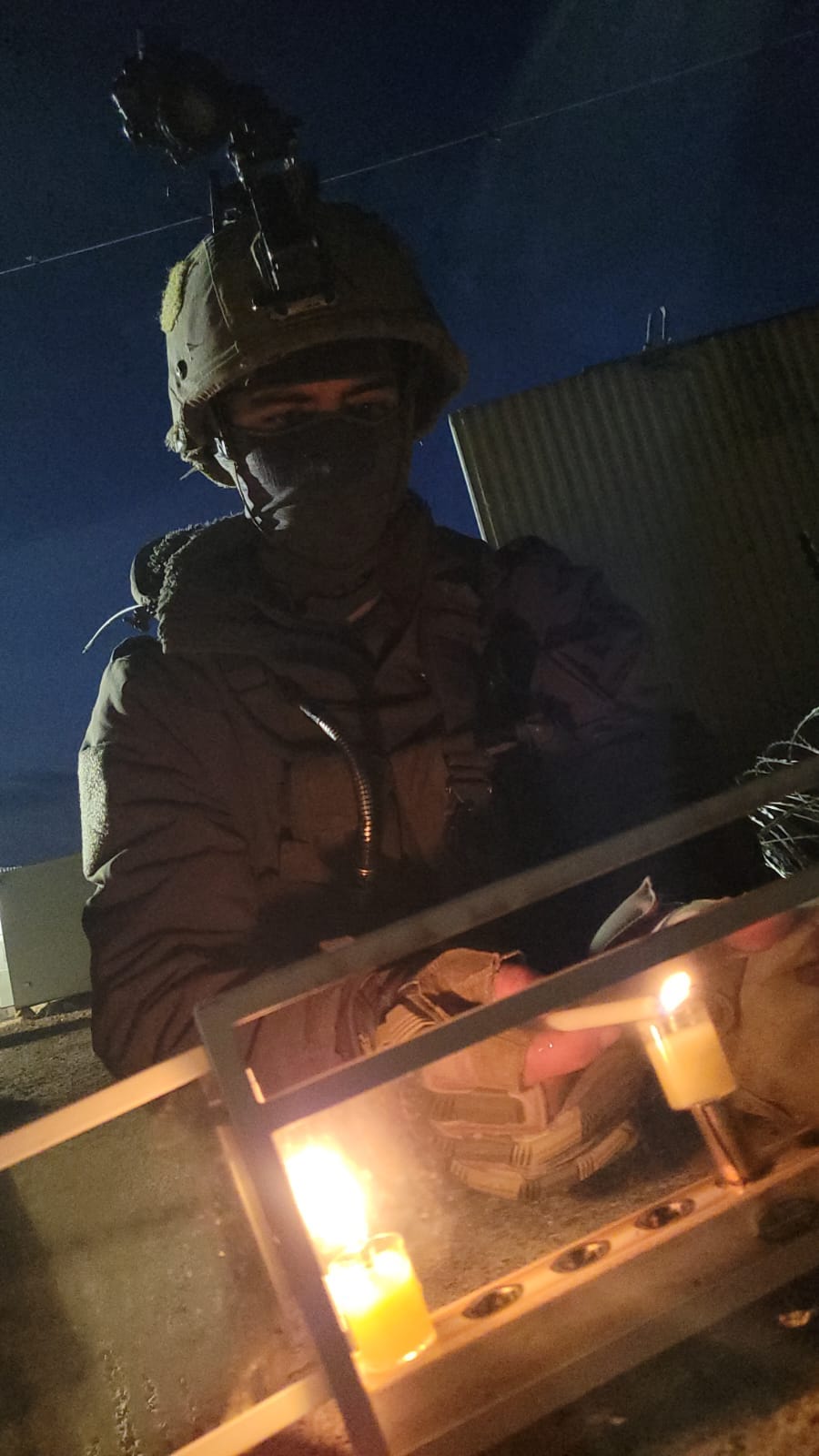
And we likewise must appreciate those people today who are the heirs of Mattisyahu of Modiin, who walk in the footsteps of the Maccabees with that genuine mesirat nefesh. Yitzhak Sadeh, one of the founders of the Palmach force that fought British colonialism, referred to this in a moving poetic letter to his soldiers:
“Here we wandered on the paths of Israel, we breath the air of Modi’in, we have seen the landscape of the bare hills, we climbed the cliffs, we ascended and descended on the paths and the trails on which the Maccabees walked… The spirit of the Maccabees became the Maccabean strategy, and we knew how the few can fight against the many, how they knew when to prevail over the camps. Their spirit became our strategy, their faith became our weapons. Because justice must be realized here, and for us. And not a dream of justice, of an abstract perception about the concept of justice—the justice here needs to be real. It will grow in the fields of wheat, barley and cereal, in the fields which are sown with tears and are harvested with song, and if necessary they are also watered with blood....
“And that same blood, we will say with all straightforwardness and confidence, runs through our blood. In this matter, we are the same as the Maccabees. You are not heroes, my friends, nor sons of giants, you are simple people, immersed in everyday life, engaged in a thousand matters. But the inheritance of the Maccabees has passed to you.”
So how was it OK for the Israelites to cross the Jordan and confront the Canaanites, which were much more numerous and stronger? In fact, Moses says that victory over the Canaanites would be achieved only through tremendous miracles comparable to the miracles G-d performed in Egypt, no less!
כִּי תֹאמַר בִּלְבָבְךָ רַבִּים הַגּוֹיִם הָאֵלֶּה מִמֶּנִּי אֵיכָה אוּכַל לְהוֹרִישָׁם. לֹא תִירָא מֵהֶם זָכֹר תִּזְכֹּר אֵת אֲשֶׁר עָשָׂה ה' אֱלֹקיךָ לְפַרְעֹה וּלְכָל מִצְרָיִם. הַמַּסֹּת הַגְּדֹלֹת אֲשֶׁר רָאוּ עֵינֶיךָ וְהָאֹתֹת וְהַמֹּפְתִים וְהַיָּד הַחֲזָקָה וְהַזְּרֹעַ הַנְּטוּיָה אֲשֶׁר הוֹצִאֲךָ ה' אֱלֹקיךָ כֵּן יַעֲשֶׂה ה' אֱלֹקיךָ לְכָל הָעַמִּים אֲשֶׁר אַתָּה יָרֵא מִפְּנֵיהֶם.
(Deut. 7:17-19)
So how was it OK?
The answer, in my opinion, is that staying in the desert was just as miraculous, given that Israelites were eating Manna from heaven, drinking water from miraculous wells, and they were protected by the clouds of glory.
In fact, once the clouds of glory dispersed after the death of Aaron, the Israelites started to be attacked by some of the Canaanites (the King of Arad), Sihon and Og, the Moabites, the Midianites, etc. Conflict was inevitable anyway.
Gotta say, this is your most yeshivish post in a while :) Post-hoc mythmaking, with all due respect.
The actual answer is that there was no "grand decision" to go to war. Rebellions build up. Same as for the war against the Romans ~70 CE (that lead to the destruction of the Temple), and the Bar-Kochba rebellion against the Romans ~132 CE.
Interestingly, in the case of 70 CE, the Talmud itself provides some anecdotes as to some of the relatively trivial disturbances that led to the war.
Though it *is* true that Judaism as we know it started in the Hasmonean era, as convincingly argued by archeologist Yonatan Adler. See my discussion here: https://www.ezrabrand.com/p/notes-on-some-historical-aspects