


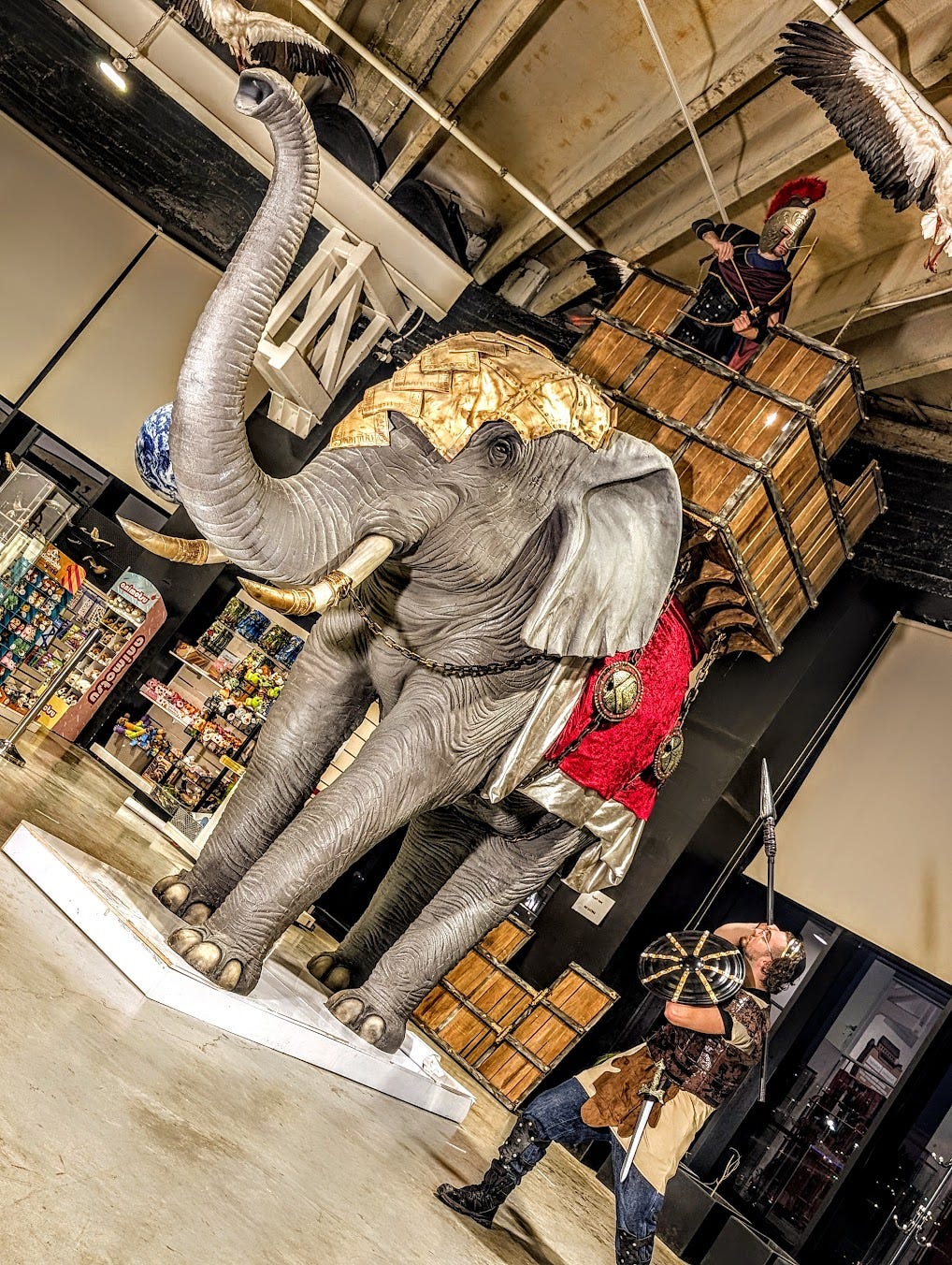
The process of designing and creating the Seleucid Greek war elephant at the Biblical Museum of Natural History was challenging and fascinating. It’s the only war elephant on exhibit anywhere in the world! I might write about it from an aesthetic and engineering standpoint in another post. In this post, I’d like to discuss how our war elephant gave me insight into the historical episode of Eleazar HaMaccabee killing a Seleucid war elephant and being crushed under it. There are two questions to be posed about the historical event, described in the Book of Maccabees and by Josephus, and widely (though certainly not universally) considered to be based on a factual event.
First is the question of why the Seleucids (or anyone, for that matter) would use elephants in a war. True, the advantages are obvious. They are the most powerful land animal in the world. They can gore with their tusks, dash people to the ground with their trunks, and stomp them into latkes with their feet. The battle tower placed on top enables several archers to stand ten feet off the ground, greatly enhancing their ability to hit people in all directions.
Yet on the other hand, there are also serious disadvantages. Elephants are incredibly highly-strung creatures. They easily panic and can then be just as dangerous for the soldiers’ own side. In fact, war elephant mahouts sometimes carried poison-tipped daggers to be able to kill their own elephant if it went rogue! So was there another compelling reason to use them?
The second question is about Eleazar HaMaccabee himself. Why did he do it? This isn’t Legolas the Elf attacking the Oliphaunt in Lord Of The Rings, in which we all know that he will survive. This was reality, in which the chances of success were slim, and you could very likely die - which is what happened.
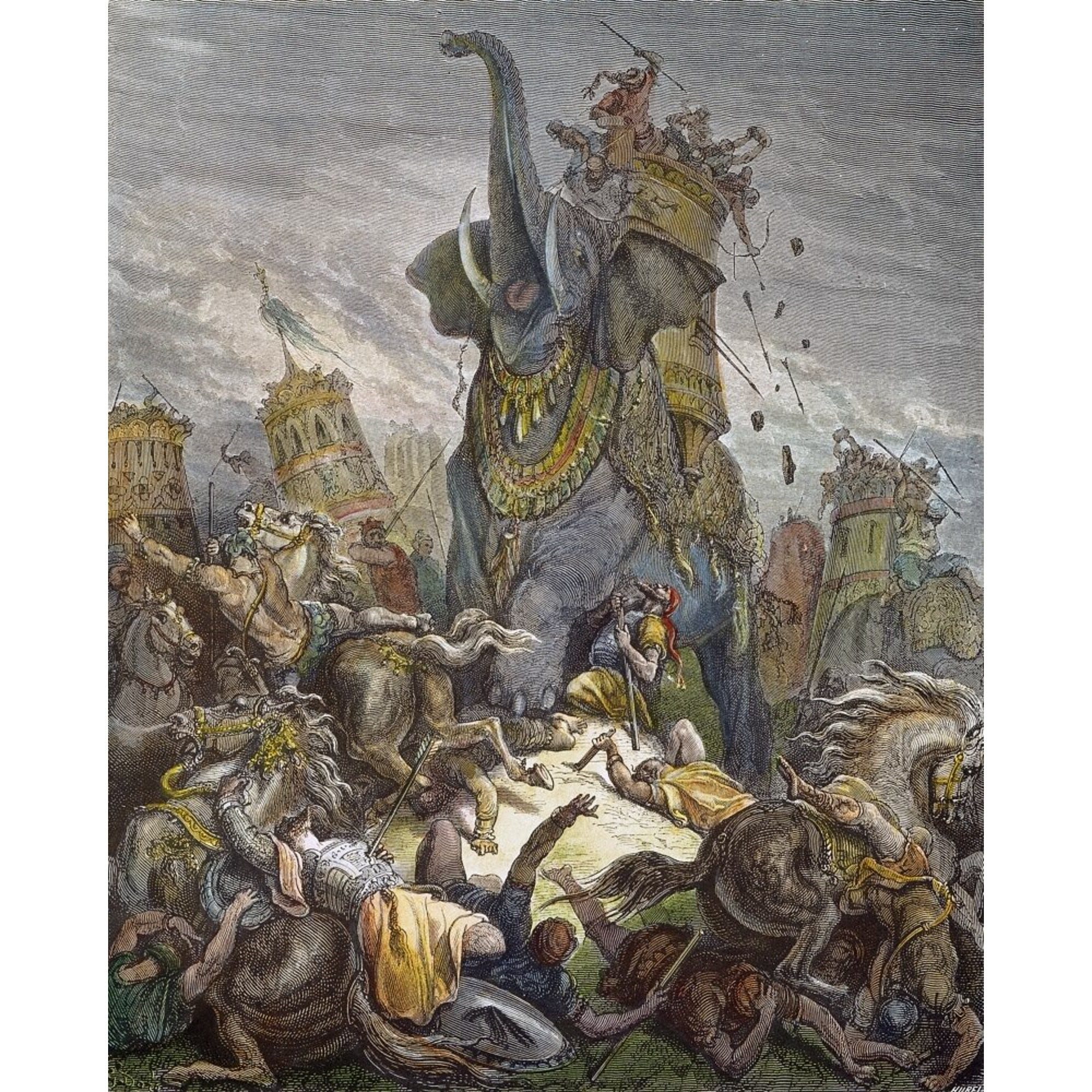
The standard account is that Eleazar thought that none other than Antiochus himself was on top of the elephant, and thus it was a mission of great importance. But various historical sources indicate that this would have been so unlikely that it’s highly implausible that Eleazar would have believed it. So why did Eleazar attempt such a dangerous act, which cost him his life?
The answer to both these questions lies in a better understanding of ancient warfare in general and war elephants in particular. And there’s a clue in another unusual creature, at the opposite end of the size spectrum, that was involved in preparing war elephants.