


It’s not often that my two areas of work, Biblical natural history and Rationalist Judaism, interconnect. (Which is probably a good thing!) But recently I noticed a connection which I find overwhelmingly powerful as an insight into Jewish history.
Through all my many years of learning in charedi yeshivos, it was made very clear that physical strength is goyish. “Hakol kol Yaakov, vehayadayim yedei Eisav” - “The voice is the voice of Yaakov, the hands are the hands of Eisav.” Jewish strength is found in Torah and prayer, not in physical might. “These by the chariot and horse, but we mention the Name of God!” “Muscular Judaism” was invented by the post-Orthodox Zionist Max Nordau in order to reform traditional Judaism. Jews don’t fight!
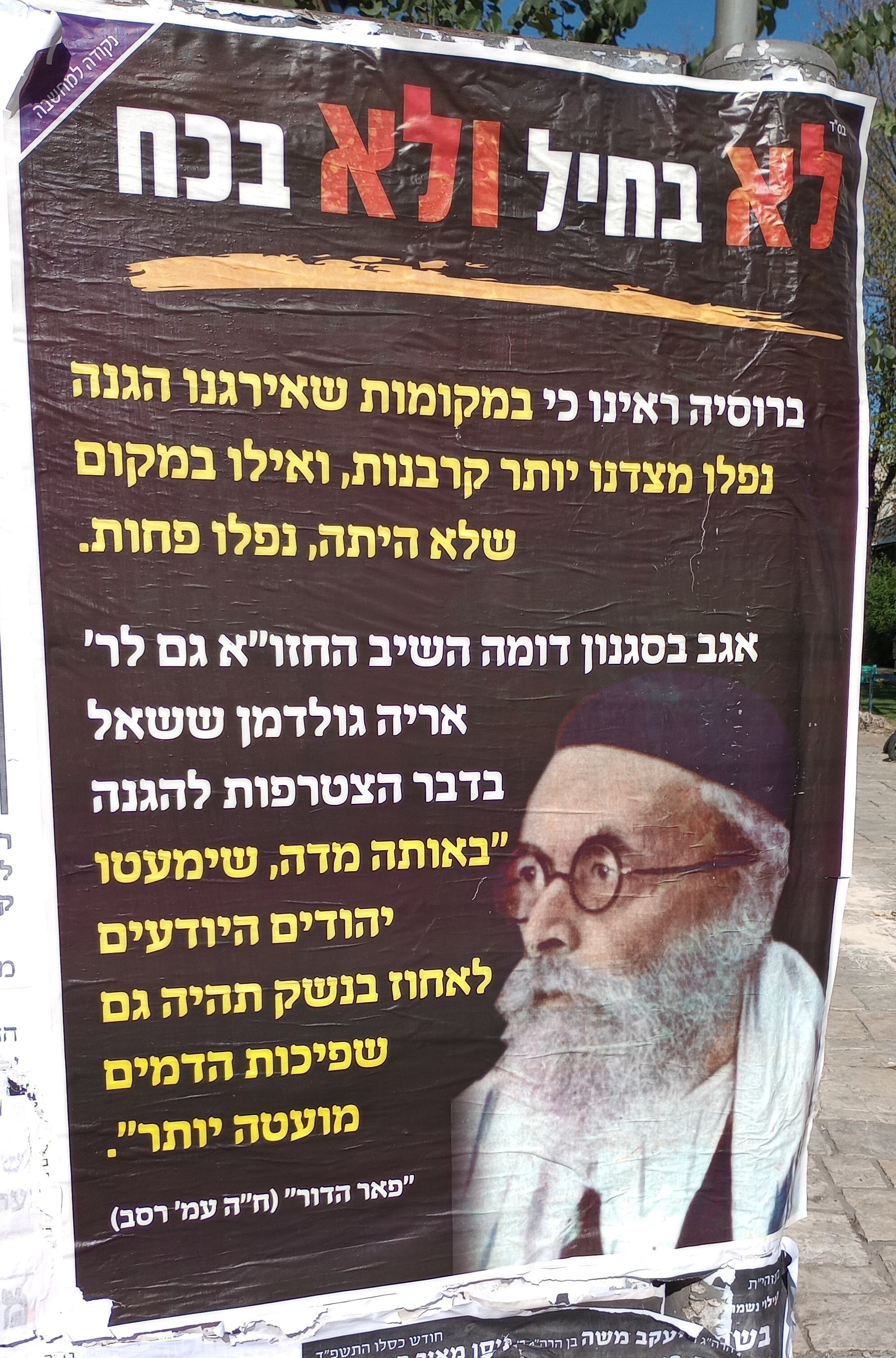
That, of course, is the very clear message being sent out by the charedi world today in Israel. They believe, or at least profess to believe, that it’s Torah (specifically, the Torah of tens of thousands of charedim aged 18-26) which is actually protecting Israel against its enemies, via supernatural means. As the Gedolim of Agudas Yisrael declared, “Every Blatt Gemara is a missile, every Tosafos is a rocket, every Kapitel Tehillim is a bomb.” You even see imagery like this:

But what about all the seemingly physical wars in Tanach? The general charedi perspective is that those were actually being conducted via mystical powers. There were only thirteen Maccabees, and they conquered the Greeks by wielding supernatural abilities. Real heroes are those who are powerful in Torah. When Gedolei Torah die, the posters declare איך נפלו גיבורים, “how the mighty have fallen” - a phrase that we shall return to later.
But in the course of my studies of Biblical natural history, I discovered something that clearly refutes this perspective - and simultaneously shows how it developed.
Av HaRachamim, “Father of Mercy,” is a memorial prayer recited during the Shabbat morning prayers. It was composed around eight hundred years ago after the destruction of German Jewish communities during the First Crusade, and the first part reads as follows:
אַב הָרַחֲמִים שׁוכֵן מְרומִים, בְּרַחֲמָיו הָעֲצוּמִים הוּא יִפְקד בְּרַחֲמִים הַחֲסִידִים וְהַיְשָׁרִים וְהַתְּמִימִים, קְהִלּות הַקּדֶשׁ שֶׁמָּסְרוּ נַפְשָׁם עַל קְדֻשַּׁת הַשֵּׁם, הַנֶּאֱהָבִים וְהַנְּעִימִים בְּחַיֵּיהֶם וּבְמותָם לא נִפְרָדוּ, מִנְּשָׁרִים קַלּוּ מֵאֲרָיות גָּבֵרוּ לַעֲשות רְצון קונָם וְחֵפֶץ צוּרָם.
“The merciful Father who dwells on high will compassionately take note of the pious, the upright, and the pure, the holy congregations who sacrificed their lives in the sanctification of God, who were beloved and cherished in their lives, and who are not parted in their deaths; they were lighter than griffon vultures and mightier than lions in performing the will of their Creator and the desire of their Maker.”
Now, when a prayer uses a verse from Scripture, many siddurim provide a reference to show the source. But in most (but not all) siddurim that I have seen, there is no reference provided in the above text. Yet it does include a verse, albeit very slightly modified. The verse is “who were beloved and cherished in their lives, and who are not parted in their deaths; they were lighter than griffon vultures and mightier than lions.”
Do you recognized where it comes from? It’s from David’s stirring eulogy for Saul and his son Jonathan:
“Saul and Jonathan, who were beloved and cherished in their lives, and who are not parted in their deaths; they were lighter than griffon vultures, stronger than lions!” (II Samuel 1:23)
It’s fascinating to contrast, however, the usage of the phrase about lions and griffon vultures in this prayer with the original meaning of the phrase in David’s eulogy.
David was praising the physical agility and power of Saul and Jonathan. This is something elaborated upon by Malbim and which I discussed in an earlier post titled Torah vs. Daas Torah, but it’s also clear from the full context:
“From the blood of slain, from the fat of warriors—the bow of Jonathan never turned back; the sword of Saul never withdrew empty. Saul and Jonathan, beloved and cherished, never parted in life or in death! They were lighter than griffon vultures, stronger than lions… How the mighty have fallen, in the thick of battle.” (II Samuel 1:22-25)
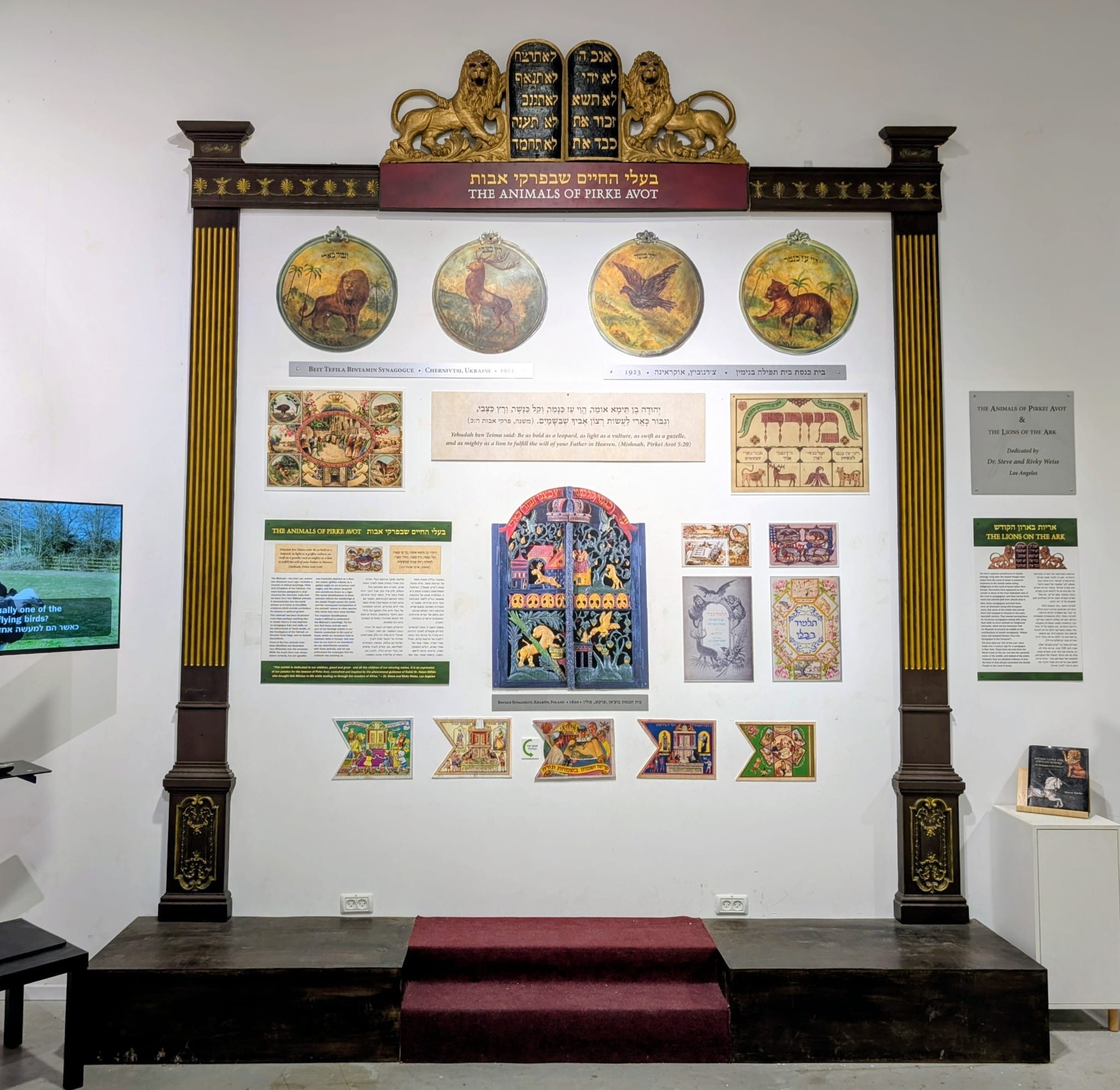
Yet the author of the Av HaRachamim prayer employed this reference to the lion and griffon vulture as referring to spiritual rather than physical attributes. This is in line with the famous Mishnah in Avot, the subject of a spectacular synagogue art exhibit at the Biblical Museum of Natural History:
“Yehuda ben Tema said: Be as brazen as a leopard, as light as a griffon vulture, as swift as a gazelle, and as powerful as a lion, to do the will of your Father in heaven.”
The reason for this is clear. Unlike Saul and Jonathan, the Jews who were killed in medieval Europe did not die as warriors. They were simply helpless people that were slaughtered. However, the author of the memorial prayer wanted to eulogize them as righteous people and martyrs, and it’s traditional to draw on Biblical verses to create texts. Accordingly, he used David’s eulogy, and added some words in order to adapt its meaning as per Yehudah ben Teima – “they were lighter than griffon vultures and mightier than lions in performing the will of their Creator.”
This is greatly representative of the larger transformation of the Jewish People that took place after the fall of Judea. During Biblical times, when the Jewish People took on and held sovereignty over the land, it required physical strength to defend it. Accordingly, the Jewish People had soldiers and armies. In this context, military abilities were something to be praised. True, the Jewish People always looked to God for Divine assistance, that would enable them to triumph even if the odds were stacked against them. But physical prowess was still something important and praiseworthy.
But when Rome took over Judea, military power was no longer an option. Worse – those Jews that attempted to use it to overthrow Roman rule ended up with catastrophic failure. The Rabbis of that era, fearful of Roman power and of the potential consequences of further Jewish rebellion, downplayed the value of physical power in Judaism. No longer were Jews to emulate the physical strength of the lion, as used by Biblical heroes; instead, the strength of the lion was to be metaphorically emulated in terms of the spirit. Heroes were rabbis and righteous people rather than warriors.
Yet two thousand years later, things changed again. Fleeing the horrors of Europe, inspired by the spirit of nationalism that arose in the 19th century, Jews ended up making it back to the Land of Israel and seeking to reconstitute themselves as a nation. They trained fighters to protect themselves, first against marauding Arabs, then against British colonial powers, and finally against Arab national armies. Physical power and military prowess returned to being relevant and valuable.
Once again it was apt to use David’s reference to the lion and griffon vulture with the original meaning. Books and monuments dedicated to Jews who fell in the heroic physical defense of their nation employed David’s phraseology. These men were lighter than griffon vultures and mightier than lions not just in performing the will of their Creator, but also in their physical agility and strength, just as David described. History had come full circle.
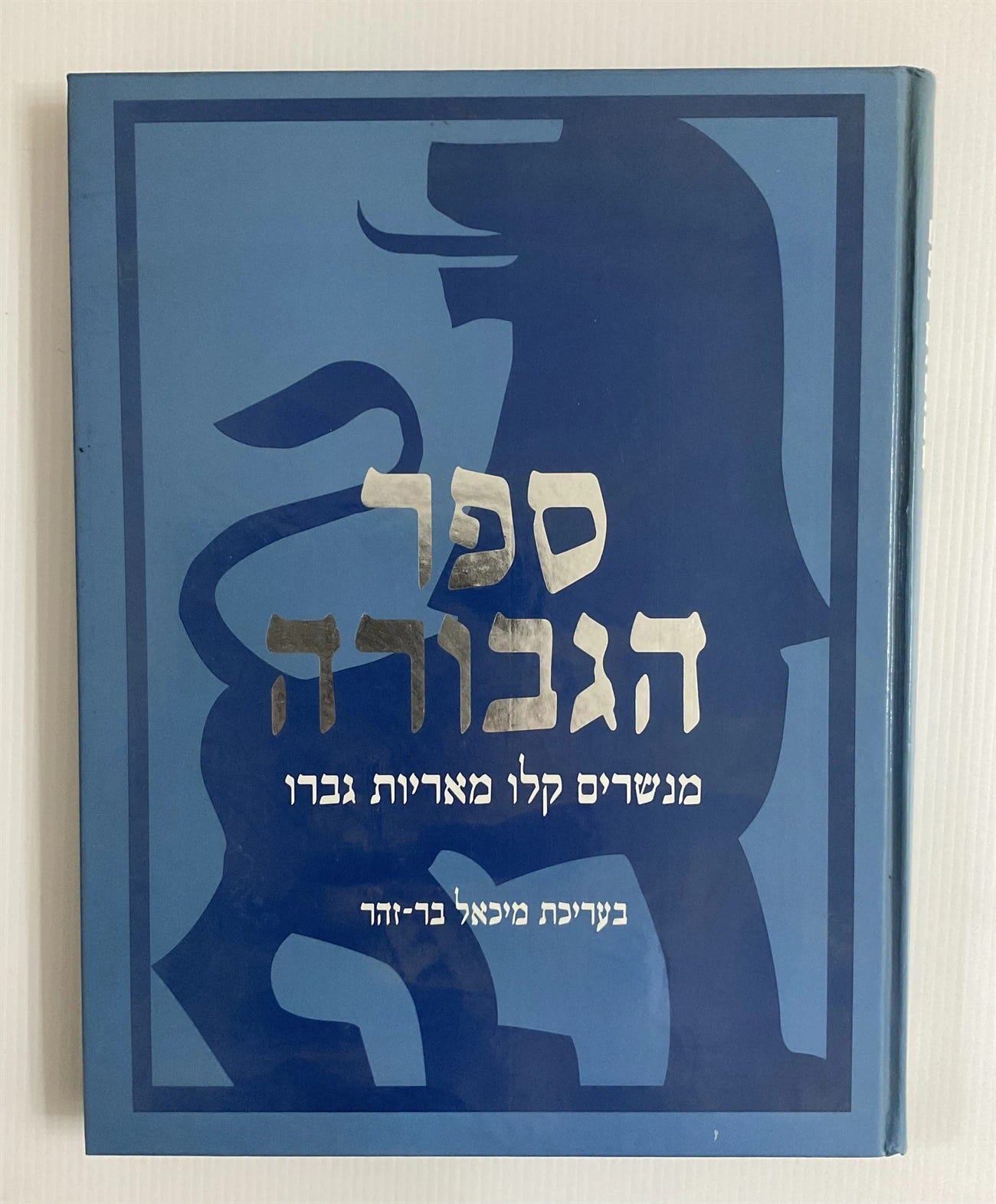
I will be including the above in the next edition of The Lions of Zion. It will also appear in the Hebrew translation of this book, which is nearly ready for publication. We already have some sponsors who are eager to participate in bringing this work to an Israeli audience, but we are looking for a few more - if you’d like to be involved, please be in touch!
Meanwhile, I have some more to say about this, but it’s too sensitive to be out in public and thus it’s limited for paid subscribers.