


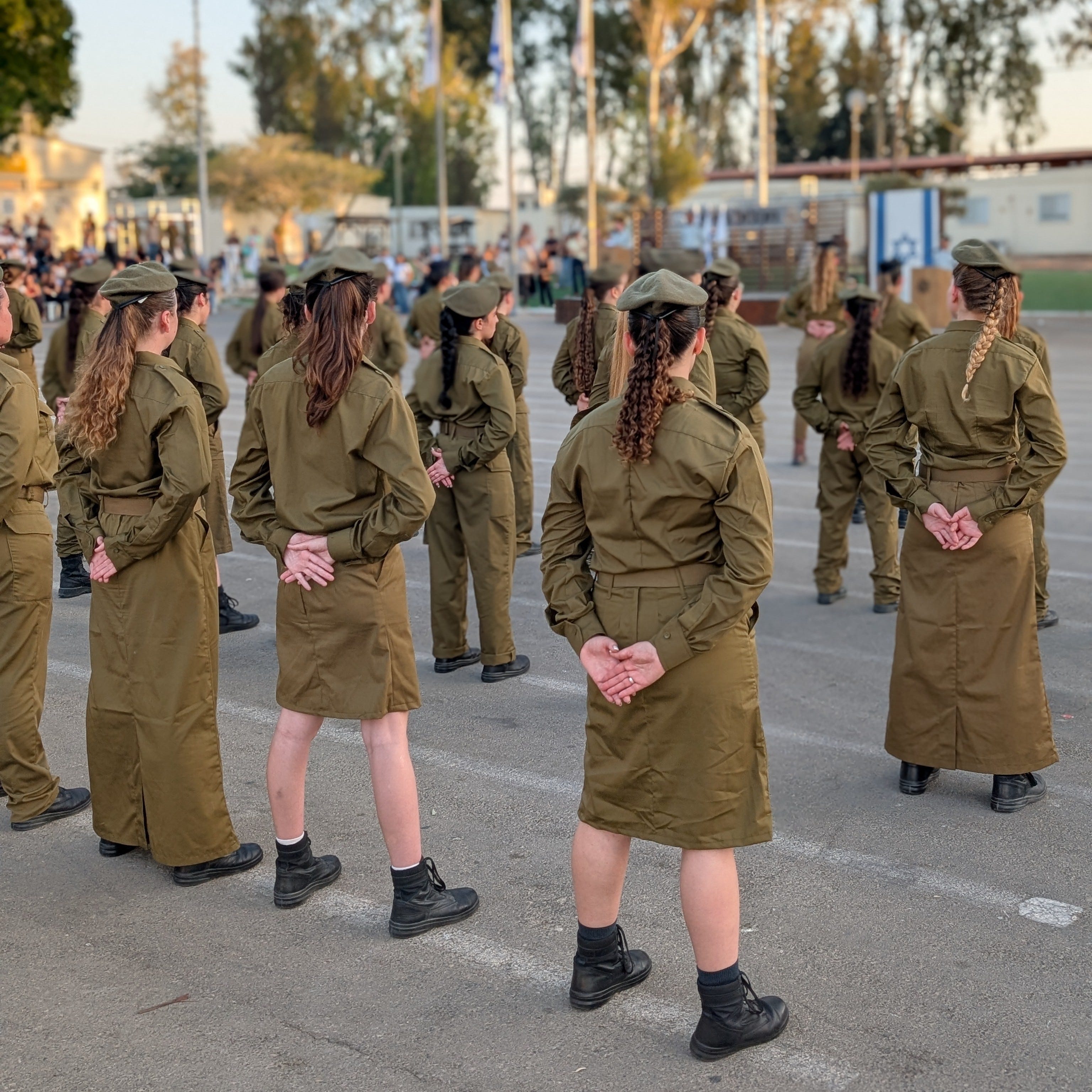
Yesterday I experienced a wonderful event. My family and I were at the Immanuel IDF Base in the south, for our second daughter’s graduation from her IDF training course (see my earlier post for a discussion about why she chose to enlist rather than do National Service). She is now a Sambatzit, which is short for Samelet Mivtza’im, which in English means Operations Room Officer (an NCO position).
This is not a combat position, so I don’t need to worry about her as I do with my son stationed on the Gaza border. Still, during the ceremony, they paid tribute to three sambatziyot who have been killed in the line of duty since October 7th. An army base is inherently a dangerous place to be.
Of the 104 young women who graduated in yesterday’s ceremony, an extremely high number were religious. It’s fascinating to see how army service for girls has become far more commonplace in the dati-leumi community - a phenomenon that I discussed in an earlier post on this topic. As I wrote previously, it has nothing to do with feminism. Rather, these girls simply feel a sense of duty to the nation, especially after October 7th. And since there is a manpower shortage, womanpower is needed to at least partially make up for the deficit.
Anyway, I was looking around during the ceremony, and I noticed that one building had a passuk painted on it:
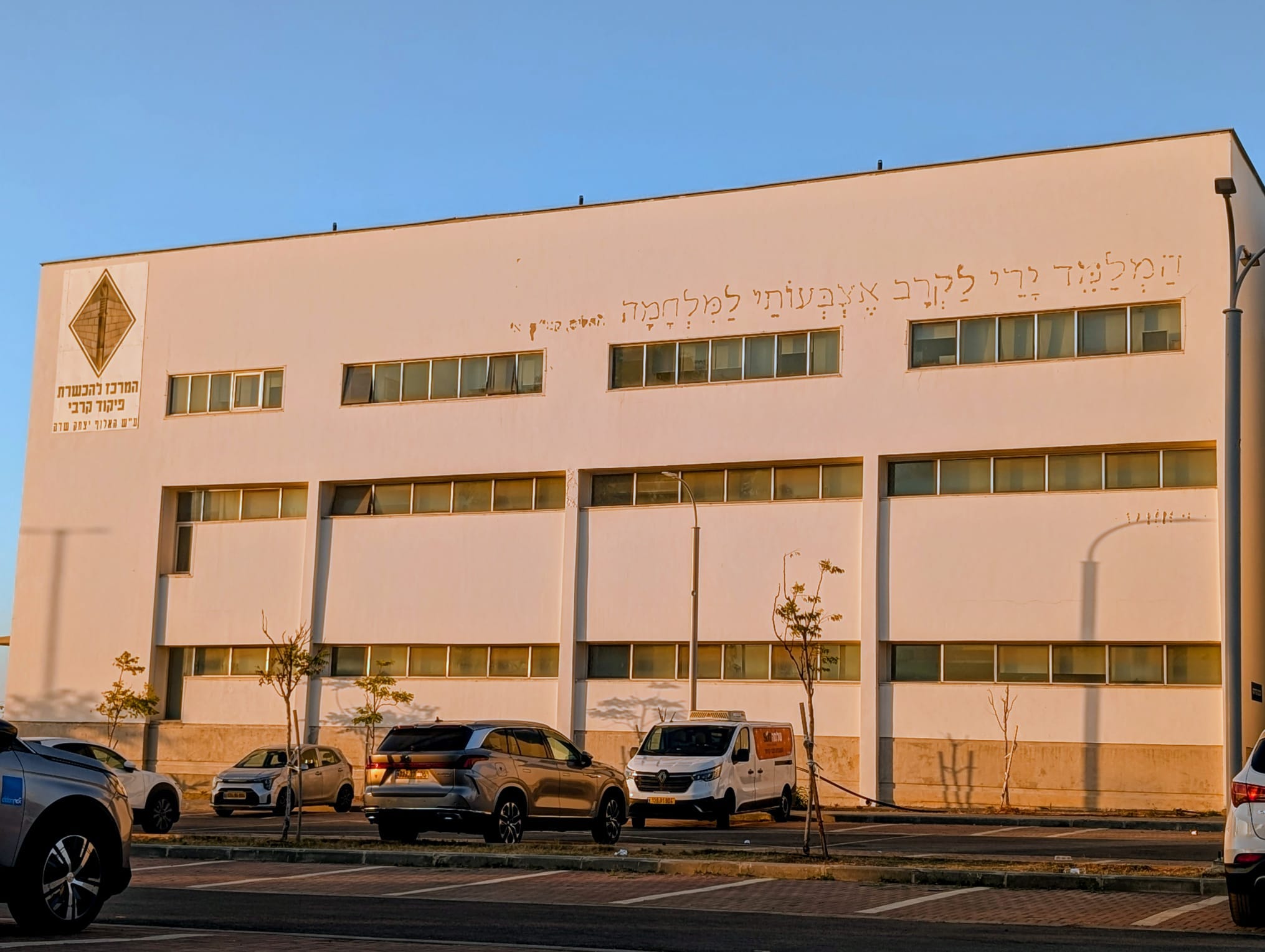
Perhaps it’s difficult to make out on the picture, but it’s a verse from Tehillim 144:1, which is as follows:
(לְדָוִד בָּרוּךְ יְהֹוָה צוּרִי) הַמְלַמֵּד יָדַי לַקְרָב אֶצְבְּעוֹתַי לַמִּלְחָמָה׃
(Of David; Blessed is GOD, my rock,) Who trains my hands for battle, my fingers for warfare.
Two things occurred to me as I contemplated this verse. First is with regard to the plain and unequivocal meaning: David is thanking God for helping him triumph in battle. I find it fascinating that the intended chiddush of this verse is now exceeded by an unintended chiddush. The intended chiddush is that David credits God as being the source of his military prowess. But the unintended chiddush - for some - is that David actually had military prowess.
This was not the message that I absorbed in my charedi yeshivos. Any Jewish “military” endeavor was portrayed as something primarily and even exclusively involving supernatural acts. Torah heroes fought with words - prayers and perhaps kabbalistic intonations - not weapons. Of course, you have to twist your mind pretty hard to believe that this is what is being described in Tanach, but I guess that’s one of the reasons why we were not encouraged to learn Tanach.
The second thing that occurred to me was a creative interpretation of this verse. David describes the successes of his hands and fingers. The commentaries explain that the mention of hands is a reference to hand-to-hand battle, while the mention of fingers refers to the release of arrows. But it occurred to me that today, we can give a new interpretation of the verse.
In Biblical times, being in the army always meant physically handling weapons. But many roles in today’s army involve sitting at a computer keyboard and knowing which buttons to press or where to click the mouse. And even in the US, you can fight for Israel by writing to the appropriate politicians and so on!
Meanwhile, I will conclude by citing some later verses from the same chapter of Tehillim:
פְּצֵנִי וְהַצִּילֵנִי מִיַּד בְּנֵי־נֵכָר אֲשֶׁר פִּיהֶם דִּבֶּר־שָׁוְא וִימִינָם יְמִין שָׁקֶר׃ אֲשֶׁר בָּנֵינוּ כִּנְטִעִים מְגֻדָּלִים בִּנְעוּרֵיהֶם בְּנוֹתֵינוּ כְזָוִיֹּת מְחֻטָּבוֹת תַּבְנִית הֵיכָל׃
Rescue me, save me from the hands of foreigners, whose mouths speak lies, and whose oaths are false. For our sons are like saplings, well-tended in their youth;
our daughters are like cornerstones trimmed to give shape to a palace.
Metzudat David explains the latter to refer to our daughters being perfectly straight, without any (moral) crookedness. Here, too, I thought of a contemporary application of this idea of “straightness.” As I saw all the girls standing sharply straight at attention, determined to help protect their people from harm, it occurred to me that this is such a wonderful merit for God’s protection.
Your daughter is a credit to her parents.
הבת מזכה את האב
and of course את האם!