


I just saw two pictures of important rabbis getting together on Sukkot. Only one of them included a dog.
Here’s the dogless picture. It’s the charedi Gedolim(TM) of Keren Olam HaTorah, whose mission is to ensure that their community has no obligations of any kind to the rest of the nation, or even to be economically self-sufficient, even while the rest of the nation is suffering so much because of the war.

And here’s the picture with the dog:
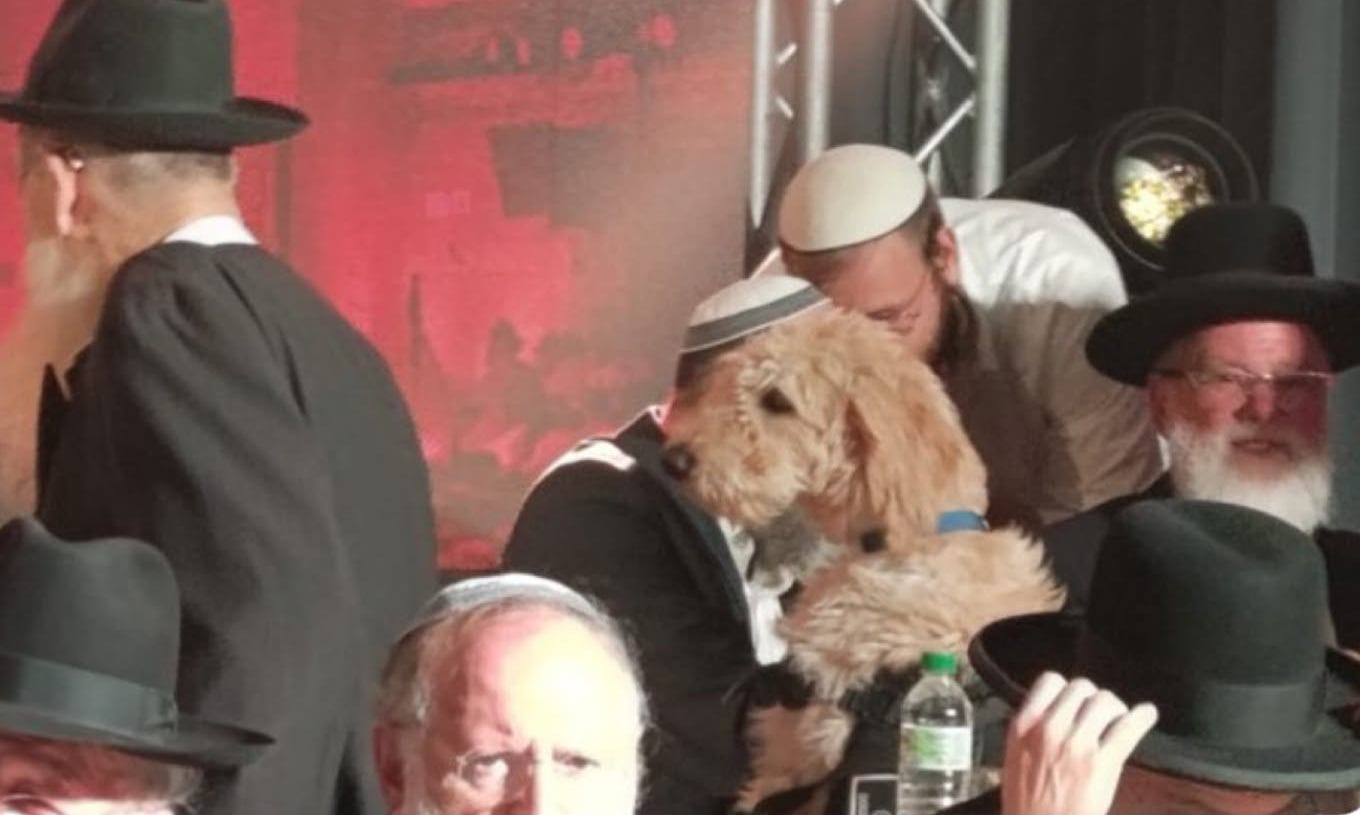
(I should probably clarify, in case it’s not clear, that the dog is not wearing a kippah. It’s just being held such that it is looking over its owner’s shoulder, directly in front of its owner’s head.)
The picture is from a Sukkot gathering of senior rabbinic figures in the Dati-Leumi (National-Religious) community. The dog belongs to the rabbi whose face is hidden behind the dog. His name is Rabbi Menachem Perl.
Rabbi Perl spent many years learning in yeshivah and kollel. He qualified as a Dayan and served as a community rabbi and rosh kollel. He also served as a combat soldier and ended up heading the halachic division of the Military Rabbinate and leading its Beit Midrash. Following this, he founded the IDF’s Halacha and Technology Department, ensuring that tech infrastructure, communications, and security systems conform to Shabbat laws during routine operations. After retiring from the IDF, Rabbi Perl was appointed in 2016 as the official Chief Rabbi of the Israel Fire and Rescue Authority, leading the spiritual and halachic framework for the nation's firefighters. Subsequently he became head of Tzomet, the institution that engineers technological solutions—such as Shabbat elevators, medical devices, and mobility scooters—that merge modern technology with Jewish law.
When October 7th happened, Rabbi Perl was long past the age for reserve duty. But, like virtually all non-charedim and in sharp contrast to charedi rabbis, he wanted to actively help. Rabbi Perl was recruited for intense work over several months identifying the dead. This was, of course, incredibly traumatic. After identifying a body that turned out to be the son of a colleague that he also knew personally, he realized that he himself - like so many thousands of others involved with the war - needed serious psychological help. He entered a facility for soldiers with PTSD and ended up with a service dog; as we discovered following Oct 7 at the Biblical Museum of Natural History, animals can be incredibly therapeutic.
There are two ways in which this tragic and yet remarkable story sheds light on the vast differences between charedi and dati rabbis. (And please note that I do not automatically criticize charedim - for example, see this post I once wrote about charedim and dogs in which I actually defended the position of the charedi MKs!)
First is that in charedi circles, everyone is always looking over their right shoulder and is concerned about not looking frum enough. The yiras bnei adam exceeds the yiras Shamayim. If I had a dollar for every time a charedi rabbi told me that he agrees with me about something but is too afraid to say so publicly, I would have an even bigger museum!
In dati circles, on the other hand, there is more comfort about doing the right thing and less concern about what others will say. Rabbi Perl, who sat with his colleagues while holding his dog, said that he wrestled with whether having a dog accompany him fit his public role as a rabbi and head of a religious institution, but decided to go ahead. “I don’t hide anything,” he said. “I know the dog can help me, so it will help me. We can worry about appearances another time.” The dog is looking over his right shoulder, but he isn’t.
Second, and more fundamentally, Rabbi Perl is suffering from PTSD as a result of his sacrifice in going out to help the nation during a terrible crisis - something that many people in the dati world did, but which hardly anybody in the charedi world did. And this itself is a result of decades of working to help the nation, beginning with his own army service, which is standard for all yeshiva students in the dati world and is considered an important expression of Torah values. This is, of course, unthinkable for a charedi rabbi, for whom it would be disqualifying rather than praised.
There are special people in the charedi world who go out to help the nation. One of the most prominent such people, Shai Graucher, was condemned by R. Dov Landau for it. Those charedim who enlist are generally shunned by their community and certainly by the rabbis.
Meanwhile, Rabbi Perl is now leading an initiative to create a dedicated treatment home for charedi soldiers suffering from trauma and PTSD, since the state institutions are not suited to charedi sensitivities. The rabbis of the communities of these soldiers abandoned them, but at least there are dati-leumi rabbis who look out for their well-being. Thank God and thank dog.
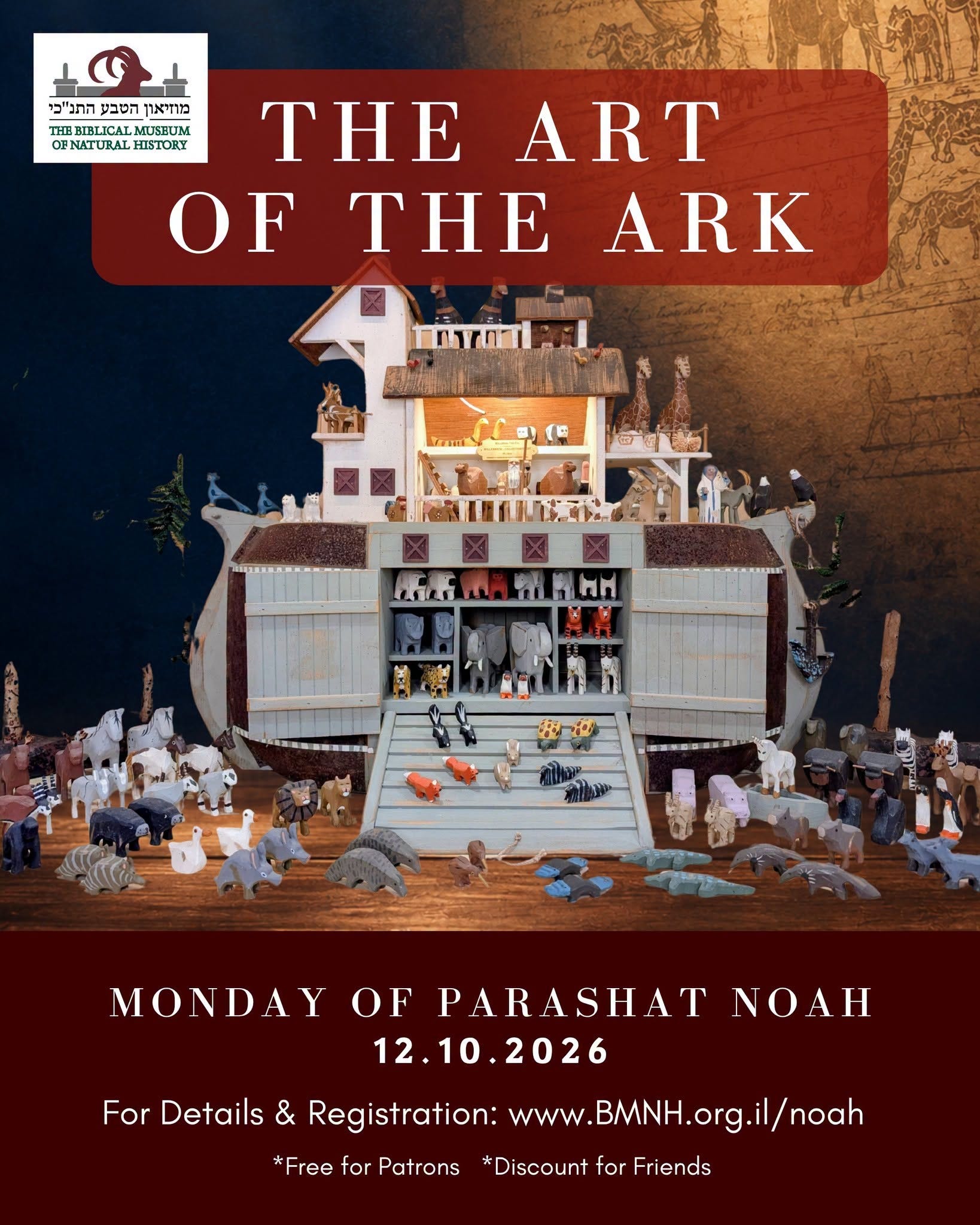
On another note - Parashat Noach is coming up soon. I'll be giving a presentation on the preceding Monday about our incredible collection of Noah’s Ark paintings and models at the Biblical Museum of Natural History, including some amazing new pieces that we recently acquired, for which you can register here. Then I’m flying out for Shabbos of Parashat Noach to be scholar-in-residence at Or Torah in Skokie. I am available on the preceding Thursday in New York for a presentation, on the following Sunday in Chicago, during part of the week in NY/NJ, and on the following Shabbos (Lech Lecha) anywhere in the US/Canada; please write if you’d like to arrange something.
Do you have suggestions of particular organizations to donate to that help soldiers with PTSD? Thank you so much.
There is a precedent in the Talmud Bavli for a rabbi with a dog. The Amora Shmuel, who was the Rosh Yeshiva of Naharda'a, owned a dog. In Chullin 112a there is a discussion about a loaf of bread used to cut meat on it. In some circumstances the loaf is forbidden to eat, and it is related that Shmuel gave such a loaf to his dog. But then Shmuel was not a true charedi, as he worked for his living as a doctor.