


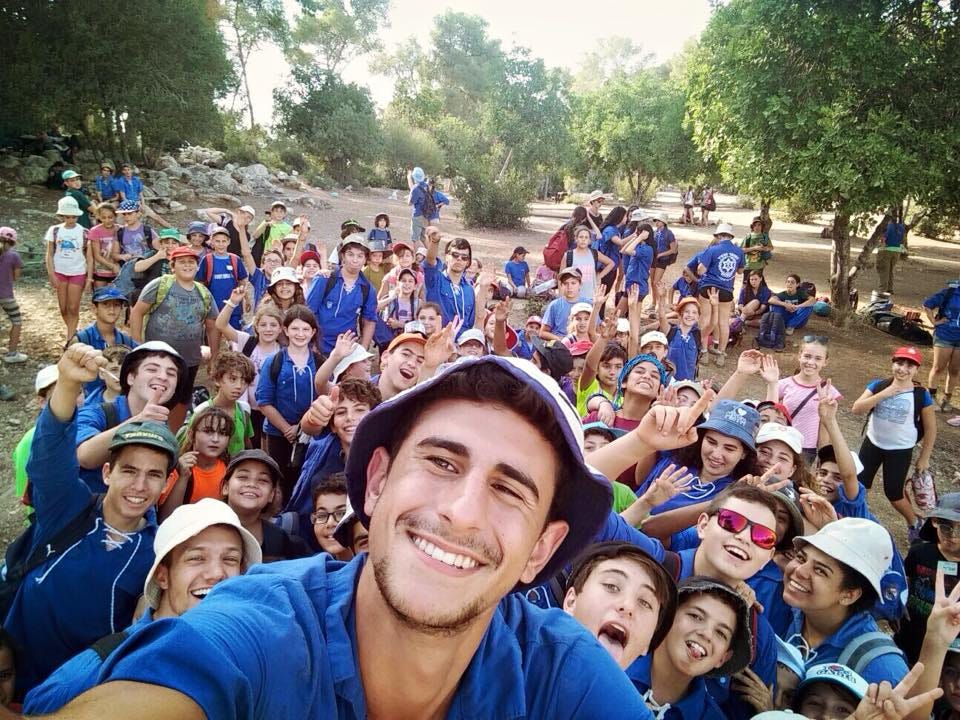
Last week some of the belongings of my youngest daughter, together with her friend’s cellphone, were burned to ashes. This happened after they left them in a box that wasn’t far enough from a Lag B’Omer bonfire made by another group of kids that subsequently blazed further than expected. Of course, it’s annoying. But, notwithstanding that I am a Lag B’Omer Grinch, I was immensely happy that my daughter was there - because she was there with her friend in their role as counselors for a bunch of kids in the Ariel youth movement.
Social scientist Jonathan Haidt, who lately has been writing about the challenges facing children in modern society, recently published a guest post by Seth Kaplan about the importance of youth movements. Kaplan notes that youth movements have a “proven ability to cultivate independence, belonging, leadership, and joy.” He says that they should be rated “not as optional enrichment, but as essential infrastructure for growing up.” Kaplan explains that youth movements “give children meaningful roles (not just symbolic ones): organizing younger kids, managing equipment, resolving conflicts, planning activities, running meetings, and so on. Responsibility and competence are learned by doing, and kids quickly learn that they matter to the functioning of the group.”
Kaplan laments that in America, youth groups such as the Boy Scouts have seen sharp decline in enrollment. And he notes that there is one country in which youth movements are particularly prominent: Israel. He notes that research has shown that that such youth groups function “not only as sites of frequent peer interaction and independence, but also as training grounds for cooperation, leadership, and resilience long before formal adulthood begins.”
Kaplan is not the only one to note Israel’s outstanding success in this area. Dan Senor and Saul Singer’s wonderful book, The Genius of Israel, is all about solving the riddle of how Israelis manage to lead lives of great fulfillment and resilience despite being subject to significant stresses and burdens. One of the chapters discusses the prominence of youth movements in Israel. Senor and Singer observe that they play a tremendous role in forging social connections, teamwork, and responsibility.
All five of my children have participated in youth movements, most of them also as counselors, and they have grown tremendously from it. These movements include Ariel, Ezra, HaShomer HaChadash, and the Sabavta movement that my eldest daughter co-founded and which is now up to twenty branches. Other prominent Israeli youth movements include Tzofim (scouts), HaShomer HaTzair, and of course Bnei Akiva. Some of these movements are specifically for the national-religious community, others are geared towards secular Israelis but have religious branches. All of them are wonderful.
Then there are the charedi youth movements.
I know of one small new excellent such movement, unsurprisingly coming from the wonderful Netzach network which is at the forefront of creating a new charedi societal model. It could be that there are others that also fulfill the important and valuable social and psychological functions described above. But many and perhaps most charedi youth movements, according to the latest reports, can only be described as evil. And that harsh description has nothing to do with the messaging that they teach.
It’s because they don’t actually exist.
To clarify: They exist on paper. They have an enormous number of children registered in them - more than 75% of all youth organization members in the entire country! And they receive many tens of millions of shekels in taxpayer funding annually from the government and other sources. But they don’t actually exist in real life. There are barely any activities or meetings - often none at all. Just signatures on forms, and instructions to counselors on how to fool inspectors.
This shocking revelation came to light a few months ago and is now the subject of an appeal made to the High Court against the Education and Finance ministries. Journalist Yoeli Brim further published a letter he received from a mother of a Beis Yaakov student who was asked to sign a form that her daughter attends activities in the Pirchei HaDegel youth group, even though there were no such activities.

To be honest, it’s shocking but not surprising. After all, charedi MKs recently openly boasted that they were able to trick their parliamentary opponents into transferring funds for something that they did not actually intend to support. (On another occasion, I’ll elaborate more upon the endless ways in which the charedi community has figured out how to obtain extensive funding from the rest of society, ethically or otherwise, and the reasons why they don’t care about this being against the Torah.)
Meanwhile, I’m looking forward to my son coming home tomorrow for a two-day break from Lebanon, along with a friend whose parents transferred their children from the charedi education system to the dati-leumi system - and who couldn’t be prouder of their choice, even with their worries for their son’s safety.
I should be ashamed that I am not surprised by the Charedi behavior. It gives Judaism a bad name even among observant Jews. "A light unto the nations"?
Where do I go to resign my membership?
Amazing how these Torah based charedi groups and their Rabbis (presumably Gedolei Hador) have their own verison of the Torah. It permits theft, extorsion, violence, putting other Jews at great risk, etc, etc. Also disappointing that other Rabbis dont call them out. I guess "covering your eyes from Evil" is also not a violation of the Torah anymore. It makes me strongly question where are our real religious leaders these days????