


Guest post by Rabbi Eli Clark
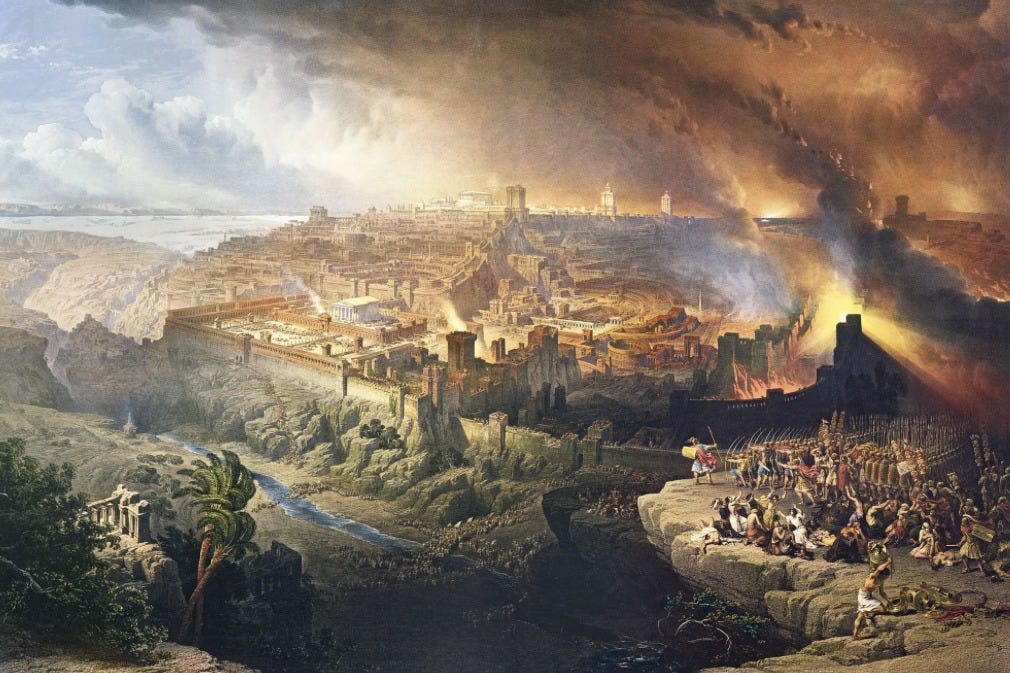
Every year as we approach Tisha Be-Av, we hear the familiar refrain that the Temple was destroyed because of sinat chinam (baseless hatred). This is a valuable and important message for all of us. Except, like so many things that “everyone knows,” it isn’t true.
The Gemara (Yoma 9b) seems to explicitly support the common view: “The Second Temple … why was it destroyed? Because there was sinat chinam in it.” But there are two reasons why this text does not prove the popular understanding is correct.
First, the Gemara is actually quoting an older text found in the Tosefta (Menachot 13:4), which words things differently: “[In the Second Temple] why were they exiled? Because they loved money and hated one another.” The original version gives two reasons why the Temple was destroyed and the people exiled: love of money and internal hatred.
Some may say that I am merely splitting hairs and the primary thrust of the Tosefta is the same as that of the Gemara – hatred among Jews caused the Temple’s destruction. However, a careful reading of the Gemara points in a different direction. The Second Temple was destroyed “because there was baseless hatred in it (betochah),” meaning, in the Temple itself. Chazal are saying that the Divine punishment was mida ke-neged mida (measure for measure). The sins committed in the Temple brought about its destruction.
In short, the Gemara is concerned with the sinful actions of the kohanim (priests) who served in the Temple, not those of the general Jewish population. This is confirmed in the Tosefta, which relates in detail the corruption of the priestly families and speaks of specific families “who are High Priests and their sons are treasurers… and their servants beat us with wooden staffs.” In other words, the Tosefta identifies the priests who loved money and hated their fellow Jews as the cause of the Temple’s destruction.
The Tosefta in another location (Kippurim 1:12) reiterates the responsibility of the kohanim for the destruction of the Temple but tells a harrowing story of one kohen murdering another in a race to the top of the altar. The people burst into tears, then the father of the victim reassures them that his son still breathes, so the knife can be removed before it becomes tamei (ritually impure), “which teaches that that the impurity of the knife was more disturbing for Israel than the spilling of blood.” Their religious values had become so warped that the laws of ritual impurity were of greater import than life itself.
What of the story of Kamtza and Bar Kamtza? Is that not a tale of sinat hinam? That is how it is generally understood, but R. Yochanan in the Gemara (Gittin 56a) frames things differently: “Because of the humility of R. Zecharia ben Eokolos, our Temple was destroyed, our Sanctuary was burned and we were exiled from our land.” The hatred of Bar Kamtza was not the cause, rather the blame lies with the Sage who prevented his rabbinic colleagues from defeating Bar Kamtza’s vengeful scheme. In short, the Gemara is not assigning the blame to the anonymous host with the incompetent servant, but to the rabbinic leadership which made decisions that were oblivious to the larger communal and national interest. This idea is expressed by R. Yochanan in another Gemara (Bava Metzia 30b): “Jerusalem was destroyed only … because they made their rulings based on the law and did not go beyond the letter of the law.”
In Eicha Rabba (4:3) the story of Kamtza and Bar Kamtza is told slightly differently from the version in the Gemara. This version describes R. Zecharia ben Eokolos as sitting at the feast and watching Bar Kamtza being ejected “and he was unsure whether to protest and did not protest.” On this telling, the “humility” of R. Zecharia was not a conservative policy of halachic decision-making but a shameful silence in the face of public humiliation. The midrash casts the rabbinic leadership as lacking moral backbone when Jews denigrate other Jews. The midrash makes the same point in a different vein (1:33): “‘Her princes are like deer’ (Eicha 1:6)… Just as these deer turn their faces away from one another during a heatwave, so too the great ones of Israel would see sinful acts and would turn their faces away. The Holy One blessed be He said to them: A time will come when I will do so to you.”
If our Sages criticized the rabbinic leadership during the late Second Temple period, we are surely required, especially on the eve of Tisha be-Av, to demand of the rabbinic leaders of today to issue halachic rulings animated by communal and national responsibility and serve as shining examples of morality and human dignity. And me we merit to see the speedy rebuilding of the Temple.
They turn their faces from rampant abuse sexual and physical and ignore the plight of Agunot. Rabbinics have much to answer for.
Thanks to Rabbi Clark for this article. I very much appreciated his thoughts. I cannot believe that- before our very eyes- the sins and travesties of the rabbinic leadership during the churban bayit are literally walking off the page of history and into our lives.
It's heartbreaking and awful.