


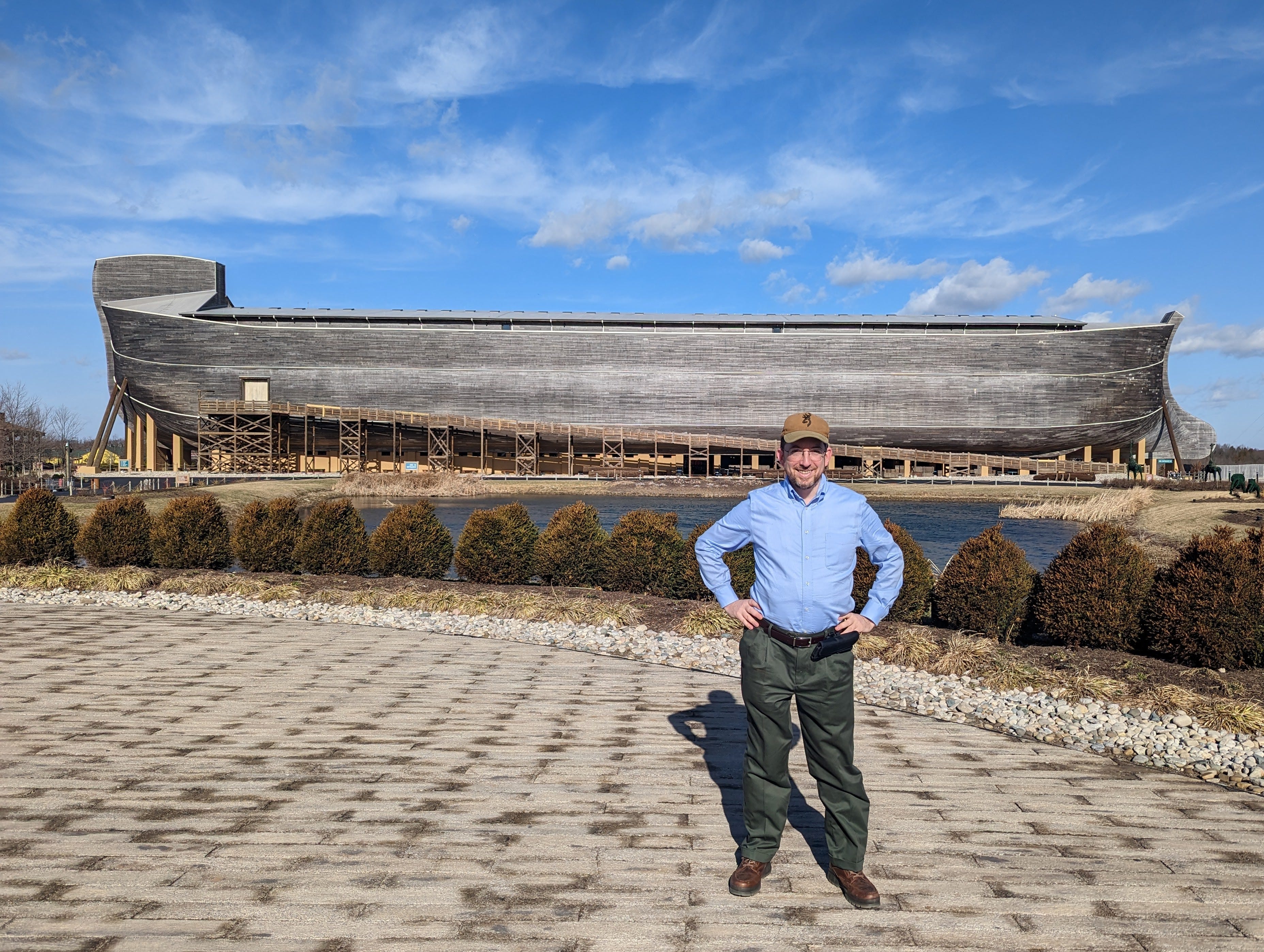
I’ve been inundated with messages from people about the breathless report that Noah’s Ark has been found by a team of scientists near Mount Ararat in Turkey. The investigation was done at the Durupınar Formation, which is 157 meters (about 300 cubits) long, and boat-shaped. Take a look:
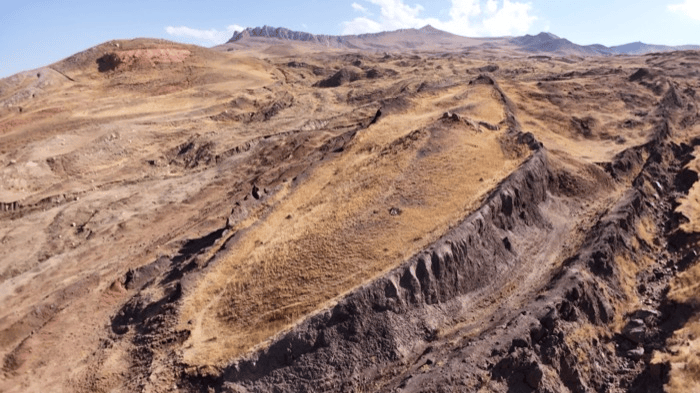
Is that the mineralized remains of Noah’s Ark, encrusted by earth, rock, and sediment over millennia?
Prof. Dr. Cenker Atila led a team that used advanced radar and performed core drilling. The researchers stated that subsurface data show straight lines, right-angle intersections, and higher organic soil content rather than a solid rock block. Core drill bits struck an extremely hard subsurface layer around 4 to 5 meters deep, which project teams have hypothesized could be petrified wood. Noah’s Ark!
Alas, sorry to pour cold water on this, but it’s not true; or, more precisely, there’s no reason to believe that it’s true.
The Durupınar Formation was first proposed to be the remains of Noah’s Ark all the way back in 1959. Geological studies were performed, but concluded that the Durupinar site is a natural geological formation. Prof. Atila’s team have not proved otherwise. Finding straight lines and right-angles is not evidence of a man-made structure; just check out the minerals on exhibit at the Biblical Museum of Natural History. Likewise, hitting a hard layer or finding organic-rich soil does not equal proof of a man-made structure. And even proof of a man-made structure is not necessarily the ark!
Anyway, with regard to the scientific issues and historicity of Noah’s Ark, I have a post which links to a variety of resources presenting all kinds of different approaches: The Noah’s Ark Challenge. Meanwhile, my passion regarding Noah’s Ark is for a totally different aspect of it: its artistic portrayal by various cultures around the world. I’ve been all-out obsessed by this topic for five years now. And I’ve managed to collect, from all over the world, what I believe to be the world’s largest collection of artistic models of Noah’s Ark - well over a hundred!
In the past year, as well as acquiring some amazing new models, I’ve also discovered a lot more about the models in our collection. In the same way as kids love organizing animals when they play with toy Noah’s Arks, I’ve been fascinated by how to organize the Noah’s Arks in our collection. It presented me with questions: why were far more artistic models of Noah’s Ark made in some countries than in others, and in some periods of history more than others? This year, I finally discovered some of the answers.
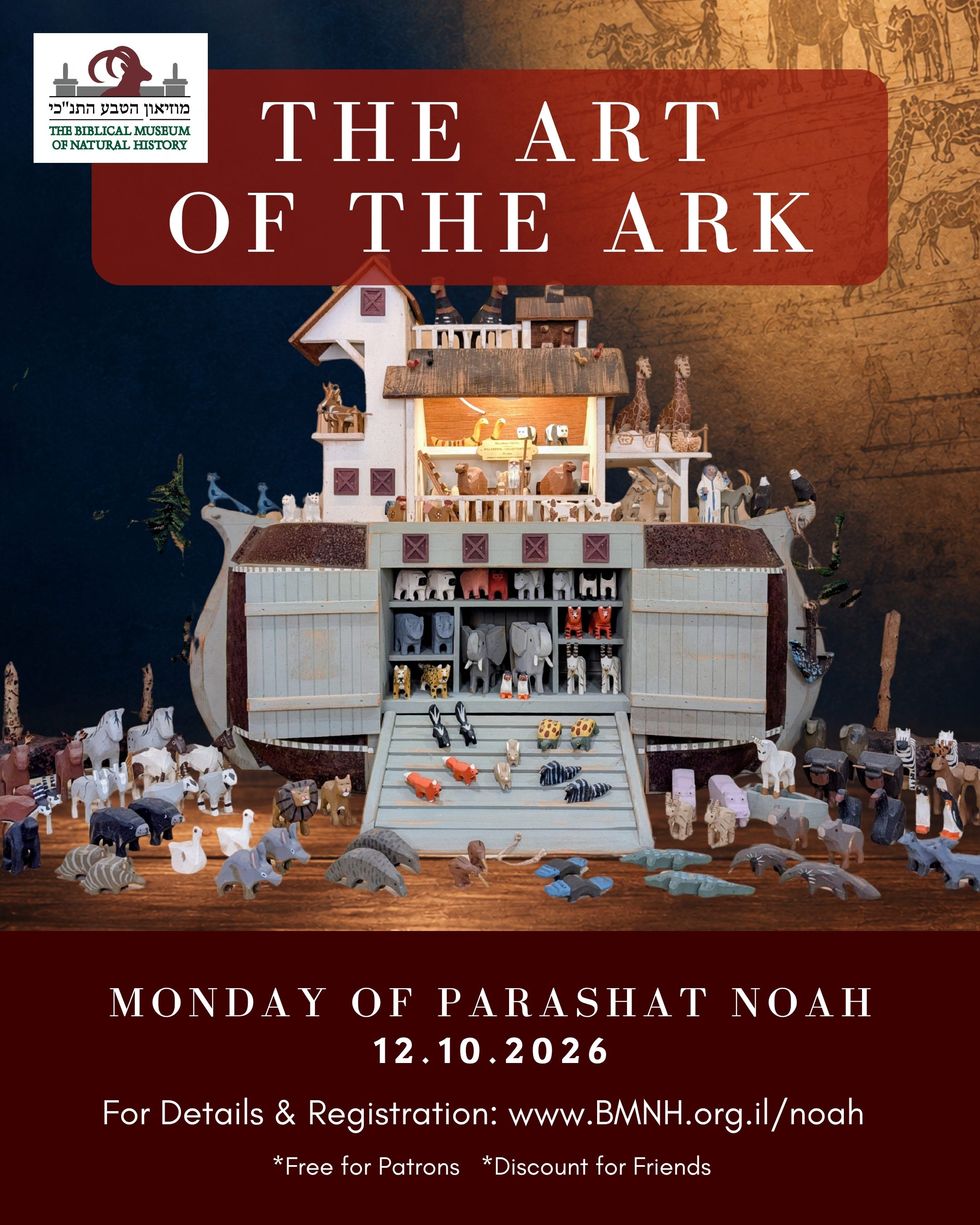
Tomorrow evening, I’ll be giving a presentation on this topic at the Biblical Museum of Natural History. Attendance is by registration only at www.BiblicalNaturalHistory.org/noah. If you can’t make it, don’t worry, my next book, The Art of the Ark, will be on this topic!
Sorry I’ll miss it!